
Can an Athletic Trainer See Private Clients in Indiana?
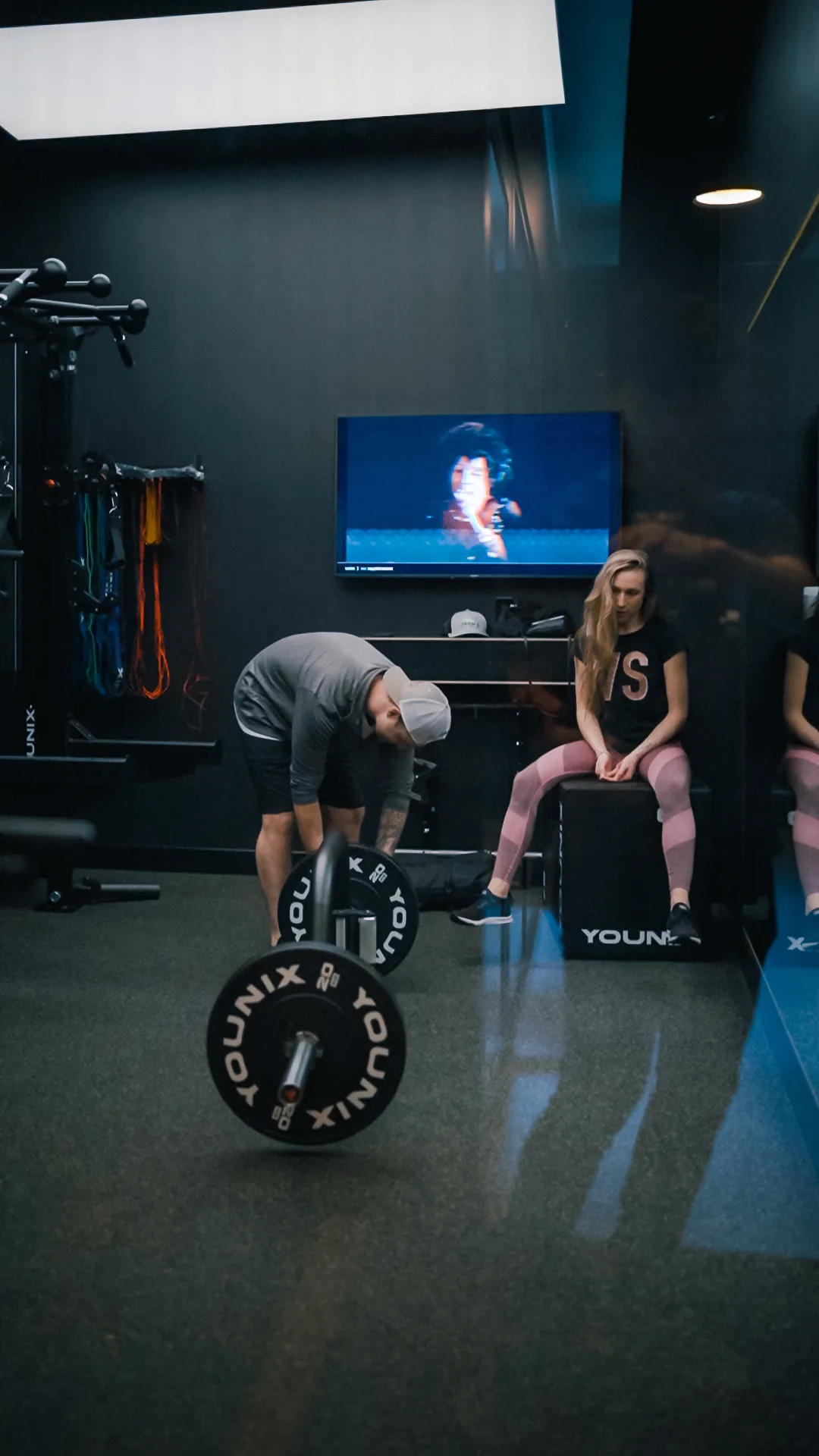
A licensed athletic trainer can see private clients in Indiana, and the rule that applies depends on which service the client is buying: athletic training is a licensed practice governed by the athletic trainer chapter of Indiana Code Title 25, while strength and conditioning coaching is unlicensed because Indiana does not license personal trainers. Most private AT practices sell both, which is why the paperwork has to say which is which. The setting is the easy part: ATs who take private athletes book hourly rooms at FlexWerk in Carmel City Center, and the first hour costs a fitness professional nothing.
What the rule says
Indiana licenses athletic trainers, and it does not license personal trainers. Those are the two verified points behind this page, checked September 2026, and they sit in the professional licensing title of the Indiana Code, administered through the Indiana Professional Licensing Agency and the Indiana Athletic Trainers Board. What the athletic trainer chapter says about physician direction, protocols, settings and the patients an AT may treat privately is exactly the detail this page will not paraphrase; ask the board, because the answer shapes your business model. This is general information, not legal or tax advice, and rules change.
Two services, two rulebooks
Separate the practice into columns before your first private client.
| Athletic training services | Performance coaching | |
|---|---|---|
| Governing rule | AT license, board rules, physician direction as the statute defines it | None; Indiana does not license trainers |
| Typical client | Injured or post-injury athlete needing licensed evaluation or reconditioning | Healthy athlete building strength, speed or capacity |
| How you describe it | Athletic training, with your license shown where the board requires | Coaching, strength and conditioning |
| Insurance | Professional liability written for licensed AT practice, covering the private setting | Trainer liability, or an AT policy that expressly covers fitness work |
| Records | Clinical-grade documentation | Coaching notes and programs |
A private AT can run both columns in the same week and often with the same family, but never in the same session under the same name. The athlete who finished reconditioning and now wants an off-season strength block has changed columns, and your invoice should change with them.
What it means for a solo AT in practice
Three decisions carry most of the weight.
- Physician direction. Athletic training is commonly practiced under some form of physician direction, and whether and how Indiana’s statute requires that in a private, non-school setting is the first question for the board. Do not build a cash practice on an assumption; get the answer, then put the directing relationship in writing.
- Scope at the door. Rented rooms are not medical facilities. FlexWerk provides a private space with a rack, cable system and dumbbells; it provides no clinical oversight, no medical equipment and no supervision. Everything clinical, from tape to documentation to emergency protocols, is yours to bring and yours to answer for.
- Referral paths. The athletes who reach a private AT after discharge often come from the sports pipeline around Grand Park, 400 acres and about 1.5 million visitors a year, and from high school programs the size of Carmel’s, about 5,200 students, and Westfield’s, about 2,800. Team physicians and school ATs are your referral partners, and they refer only to a practice whose scope is visibly clean.
Common mistakes
- Advertising athletic training for healthy kids who are really buying speed and strength work. Right service, wrong label, and a licensed label at that.
- Treating an injury in a coaching session because you can. If it needs your license, it needs the licensed column, with everything that column requires.
- Assuming a school or hospital employer’s coverage follows you into private work. It does not; buy your own.
- Using the licensed credential to imply that a rented gym room is a clinic. Parents hear athletic trainer and picture a training room at a school; say plainly where the session happens and what it is.
The full profession picture, from the return-to-play gap to the seasonal economics of a private AT caseload, is in private space for athletic trainers; this page is only the licensure question that page points to. The coaching column looks like any performance coach’s business, which the sports performance coach facility page describes, and the sibling question for a physical therapist assistant who coaches, with the same two-hat logic, is in can a PTA work as a personal trainer.
The CPA or attorney line
Before the first private athlete: one call to the Indiana Athletic Trainers Board about settings and physician direction, one hour with a healthcare attorney to draft the intake and consent forms for each column, and a written confirmation from your insurer that both columns are covered where you actually work. Rates for the coaching column commonly sit in the $75 to $125 per session band that private north-metro work supports, and a licensed credential justifies the top of it; the licensed column prices as a clinical service and should be priced with your attorney and insurer in the room.
Then book the free hour, bring one cleared athlete, and run the session under the column it belongs to.
Related questions
Do I need a physician's direction to see private athletes as an AT?
Athletic training is commonly practiced under physician direction, and Indiana's requirement for a private setting is a board question, not a website question. Get it answered in writing before your first licensed private session.
Can I coach healthy athletes without my AT license mattering?
Yes, because Indiana does not license personal trainers. The license matters again the moment you describe the work as athletic training or treat an injury inside it.
Is a rented gym room an acceptable setting for licensed AT work?
That depends on what the board and your insurer say about settings. The room itself is private and equipped for strength work, provides no clinical oversight, and everything clinical arrives with you.