
How to Teach Chair Yoga to Private Clients
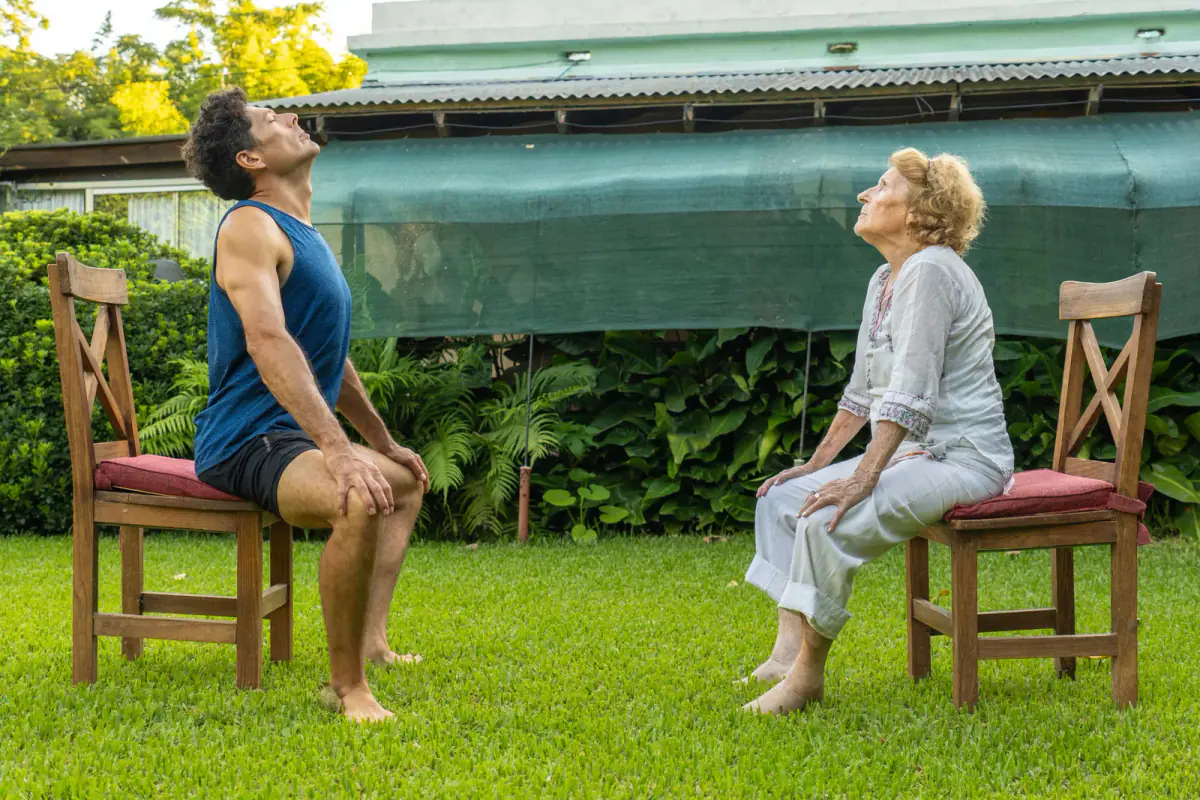
To teach chair yoga to private clients, build the lesson from seated, supported and standing at the chair blocks with slow transitions, confirm any medical conditions with the client’s clinician first and set up a room with a sturdy chair and clear floor. The format suits older adults and people with limited mobility, and it works well one on one because you can pace the lesson to the person. The room you choose for a private yoga practice matters as much as the sequence.
Before the first lesson: clearance and intake
Chair yoga is gentle, but the clients who seek it often manage conditions, and the first step is to ask. A short intake covers:
- Balance concerns, recent falls or dizziness
- Heart, blood pressure or breathing conditions
- Joint replacements, surgery or pain
- Medications that affect balance or energy
- The client’s own goal, such as easier mornings or steadier walking
If the client has any medical concern, ask them to check with their physician or physical therapist before the first lesson and teach within what is cleared. You are not diagnosing or treating, and you refer questions about symptoms back to a clinician. The wider picture of training this age group is in coaching clients over 70, which shares the principle that pacing the week matters as much as the hour.
Room setup: what to check before the client arrives
A private room is an advantage because you control the floor and the path. Walk through this list:
- A sturdy chair with no wheels, a flat seat and no tilting arms.
- A non slip floor surface. Test it in the shoes the client will wear.
- A clear path from the door to the chair, free of bags and cords.
- Space on both sides so you can stand within reach without crowding.
- A second chair for the client’s rest or for your own demonstration.
- Lighting and temperature adjusted for comfort; the room controls let you set the lighting.
At FlexWerk in Carmel, the garage parking is a short walk from the door, and clients arrive without a lobby to cross, which makes arrival simpler for many older clients. Rooms there are equipped for strength and cardio rather than yoga, so chairs, props and any supports are yours to confirm and bring; check the app or ask the pro support team about what furniture is in a given room before you plan around it.
The sequence: a template for forty five minutes
| Minutes | Block | What happens |
|---|---|---|
| 0 to 5 | Arrival and check in | Seat, water, how the body feels today |
| 5 to 10 | Breath and settling | Slow breathing, shoulders and neck |
| 10 to 25 | Seated mobility | Ankles, knees, hips, spine, arms |
| 25 to 35 | Standing at the chair | Gentle weight shifts, holding the chair back |
| 35 to 42 | Seated cool down | Longer exhale, gentle twists |
| 42 to 45 | Rest and review | What felt easier, one home movement |
Keep the arms of the lesson simple: movements the client can repeat, in a slow rhythm.
Safe transitions: where most mistakes happen
The risky moments are not the poses but the changes between them. Build habits:
- Stand up with a plan. Say what happens next before the client moves: feet flat, hands on the chair, a breath, then stand.
- Pause before standing. Ask how the client feels after a seated block; dizziness is common after longer sitting.
- Stay within reach. Do not walk away during a transition, and place your hands only after you have asked.
- Return to the chair before fatigue. Finish standing work while the client still has energy.
Treat any dizziness, chest discomfort or shortness of breath as a reason to stop and seek medical help.
Props and variations
You can keep the kit small: a strap for reaching, a folded blanket for the seat or back and a cushion for the feet if the chair is high. For clients with wrist, knee or hip limitations, offer variations that avoid the sore area and let the client choose. Language matters: use invitations such as “if it feels right” rather than commands.
Who the clients are and how they find you
Chair yoga clients often come through word of mouth, physical therapists’ offices that suggest gentle movement and senior living communities. A senior fitness specialist’s private space shows how privacy changes what older clients are willing to try. Pricing sits in the same private band as other one on one work in the north metro, commonly $75 to $125 a session, and a duet of two clients can share a lesson in a larger room.
Next step
Book one hour in a private room, bring a chair you trust and rehearse the sequence with a friend before a paying client arrives. The first hour is free for fitness professionals, and the rehearsal tells you whether the room works for this population.
Related questions
Do chair yoga clients need a doctor's clearance?
Ask every client about conditions and, where there is a medical concern, get clearance from their physician or physical therapist before you start. You teach within that clearance and do not diagnose or treat.
What kind of chair works best?
A sturdy chair without wheels or arms that tilt, set on a non slip floor, with the seat at a height where the client's feet rest flat. Test the chair yourself before the first lesson.
How long should a chair yoga lesson be?
Forty five to sixty minutes is common, with slower transitions and more rests than a mat lesson. Many older clients prefer a shorter, more frequent format.