
Fall Risk Tests Trainers Can Run With Older Clients
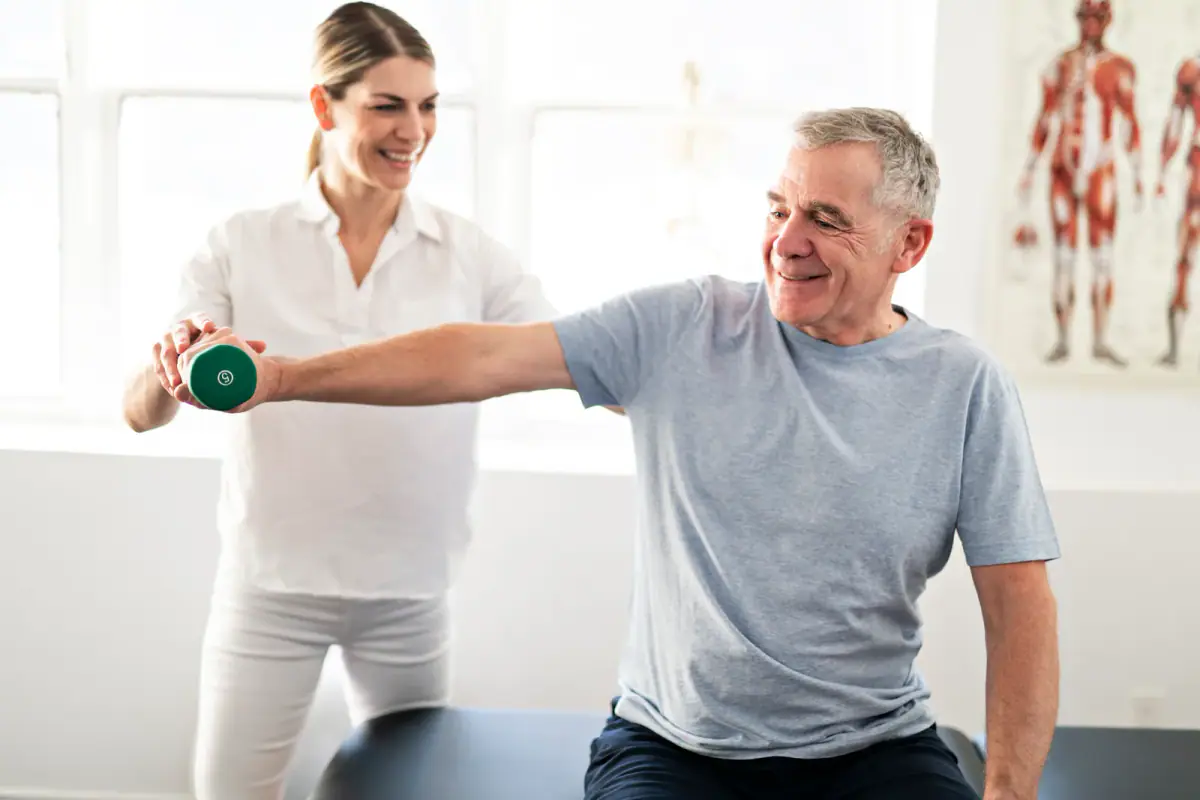
A trainer can run three simple tests with an older client, a timed chair stand, a measured walk and a staged balance hold, but only after the client’s physician has cleared her to exercise, and any low result, recent fall or dizziness goes back to her clinician instead of becoming a label. These are fitness baselines, not diagnoses. This page is general guidance, not medical advice.
If you are an older adult reading this on your own, a private workout space is a quiet place to test, and the same logic holds: ask your physician before trying any balance test at home or in a rented room, and keep another person nearby.
Before any test: the clearance conversation
Start with questions, not movement. Ask whether the client has had a fall in the past year, whether she feels unsteady, whether she gets dizzy on standing, and whether her physician has cleared her for exercise. Write the answers down. Questions to bring to her physician:
- Am I cleared for exercise and for balance and strength testing?
- Does any medication I take affect balance or blood pressure?
- Is there a movement I should avoid?
- Should I see a physical therapist about my balance first?
- What would you like me to report if I have a near-fall or dizziness?
If any answer is no, unclear or worrying, stop. Refer first, test later.
Test one: the chair stand
This measures leg strength. Use a sturdy chair of standard height against a wall. The client sits with arms crossed over her chest and feet flat. On “go,” she stands fully and sits again as many times as she can in thirty seconds, while you count complete stands. Stop immediately if she needs her hands or reports pain.
Record the count, the chair height and any compensations, such as leaning forward or rocking. Compare the count with published norms for her age and sex from the protocol you follow, and write down the source. A result below the norm is a conversation, not a diagnosis.
Test two: the measured walk
This measures walking speed and, with the turn, mobility. Mark a short walkway on the floor and time the client walking it at her usual comfortable pace. A common variant is the timed up and go, in which she stands from a chair, walks a short marked distance, turns, returns and sits. Stay at her side and slightly behind, within arm’s reach, and allow her usual walking aid.
Slow or hesitant walking, a wide base, shuffling or reluctance to turn are things you describe in your notes, not interpret. If she is much slower than the published norm for her age, or you see loss of balance, tell her plainly that you would like her physician to look at it.
Test three: the staged balance hold
This measures static balance. The client progresses through four positions, each held for ten seconds if she can: feet side by side, one foot slightly forward, one foot directly in front of the other, and standing on one leg. Allow her to stop at any stage she cannot hold. Stand within reach, and have a stable handhold nearby, such as a rack upright or wall.
Record the last stage she completed and how long she held it. Stop the test if she grabs, sways sharply or reports dizziness. Repeat with the same instructions and surface next time.
How to score without overreaching
Scoring is a comparison, not a verdict. Use the published norm tables attached to the protocol you follow, keep a copy, and note the version. Your report might say: “Today’s chair stand count was below the published range for her age group, so I suggest sharing it with her physician.” You are not saying she will fall, and you are not saying she will not. A trainer works within a scope of practice and a physician or physical therapist owns the interpretation.
Scores also change with sleep, medication timing and mood. Test at the same time of day under similar conditions, and treat the first reading as a baseline rather than a rank.
Referral triggers
Refer to her physician or a physical therapist before continuing if any of the following appear:
- A fall in the past year that her physician does not know about
- Dizziness on standing or during any test
- Pain, chest discomfort or shortness of breath
- Marked difficulty with any test, or inability to complete it
- A new medication or change in health since her last clearance
Document the referral and the date, and wait for written clearance before the next test or any progression.
A quiet room helps
Balance tests need a clear floor, a safe handhold and no audience. A private booked space gives you all three, and a rented private room can be booked by the hour. Cardio spaces start from $12 an hour and training spaces run $18 to $22, and eligible solo renters can use a free first hour. For eligibility and how booking works, see the private workout space page. If you run group balance work, the format and the physician line are laid out in fall prevention class space for balance instructors, and the wider screening framework is in the new-client assessment battery.
Related questions
Can a trainer say a client is at high risk of falling?
A trainer reports what the test showed and how it compares with published norms. Calling someone high risk is a clinical judgment, so a below-norm result is a reason to send the client to her physician, not to label her.
Do these tests need special equipment?
Very little: a sturdy chair, a stopwatch, a measured walkway and a spotter within arm's reach. A rack upright or wall nearby gives the client something to reach for if she loses balance.
How often should I repeat the tests?
Commonly at baseline and then every eight to twelve weeks, and again after any fall, new medication or change in health. Use the same chair, surface and instructions each time.