
Freestanding Heavy Bag for Private Lessons in a Rented Room
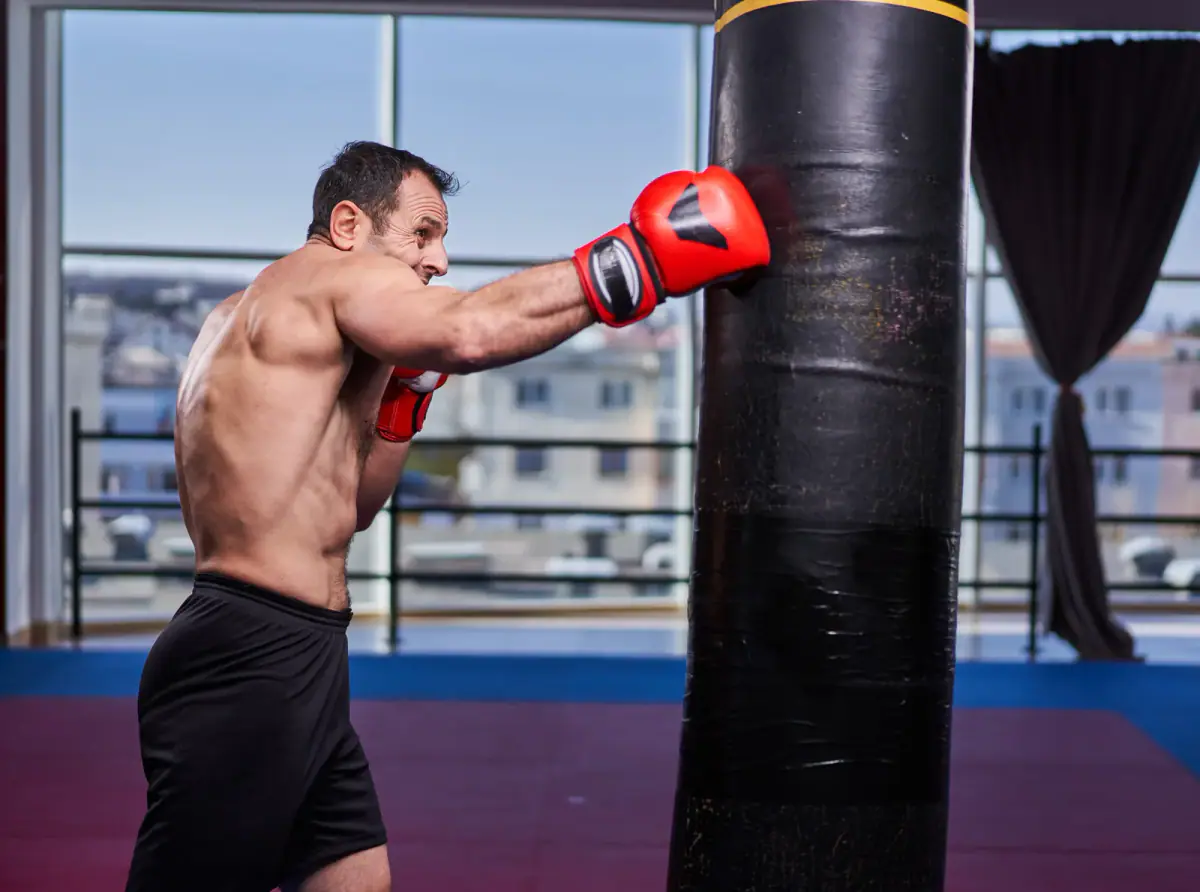
A freestanding heavy bag can work for private lessons in a rented room where nothing hangs from the ceiling, but whether it is allowed, where it goes and how loud it is are facility facts to confirm before you bring one. At hourly facilities the common pattern is carry-in, carry-out equipment that you handle yourself, and a base filled with water or sand makes a bag heavy to move. For FlexWerk, the pro support team has the specific answer, so ask before you book through the first-hour offer.
How a freestanding bag differs from a hanging one
A hanging bag swings on a mount, so it gives with each strike. A freestanding bag sits on a wide, weighted base and mostly stays put, with a slight lean. The feel is different, the footwork around it changes and the footprint grows. It also needs a flat, stable surface.
| Factor | Hanging bag | Freestanding bag |
|---|---|---|
| Needs a ceiling mount | Yes | No |
| Floor footprint | Small | Larger base |
| Portability | Low | Moderate when empty |
| Feel | Swings | Rocks and returns |
Before you carry one in, ask these questions
- Is a freestanding bag allowed for my booked hour?
- Is there floor protection, and does the base need a pad under it?
- Where can it be stored between sessions, if anywhere?
- How should a filled base be emptied and moved?
- How does sound and floor impact travel to neighbors?
If the answer to any of these is unclear, the answer for now is no. Write the facility’s reply down and keep it with your records.
When a bag adds value
If this, then that: if your lessons already centre on pad work, the bag is optional; if you teach combinations in rounds and want a second station, a bag lets a second client work while you hold pads for the first; if you teach beginners, a stable bag helps them practice technique without the swing. If the room’s floor is limited, skip the bag and use cardio stations between rounds, as covered in how much room mitt work needs.
What the room already supplies
Strength spaces hold a custom lifting rack, a cable system and dumbbells, and cardio spaces hold HYDROW rowers, CLMBR machines and curved treadmills; the list is in what is in a FlexSpace. A heavy bag is not part of that inventory. What you bring in falls under the carry-in rules for personal equipment.
A bag-free session works too
A full lesson can be built from pad rounds, footwork drills and conditioning intervals, with no bag at all. Treat the bag as a bonus once you know it fits.
Weight, fill and the carry
A freestanding bag is usually shipped empty and filled at its destination, which creates a practical question: where does the water or sand come from and go afterwards? If the answer involves a sink or a drain, ask about it. A model you can fill, test and empty at home before the session keeps the facility out of your logistics, and a bag small enough to carry alone avoids a two person lift through the door.
Next step: email the pro support team with the model, weight and dimensions of the bag you are considering, and book your free first hour to test a bag-free session in the meantime.
Related questions
Can I bring a freestanding bag into a rented training room?
It depends on the facility's equipment policy, floor protection rules and storage. Ask before you book, and confirm with our pro support team for FlexWerk, rather than carrying the bag in on the assumption it is fine.
What is the difference between a hanging and a freestanding bag?
A hanging bag swings from a mount and absorbs force by moving. A freestanding bag sits on a weighted base and moves less, so it feels different and has a larger floor footprint.
Are freestanding bags quiet?
Not necessarily. They can thud and rock against the floor, and a filled base is heavy to move. Ask how sound and floor impact are handled in the room you book.