
Hybrid Telehealth and In Person PT Practice Setup
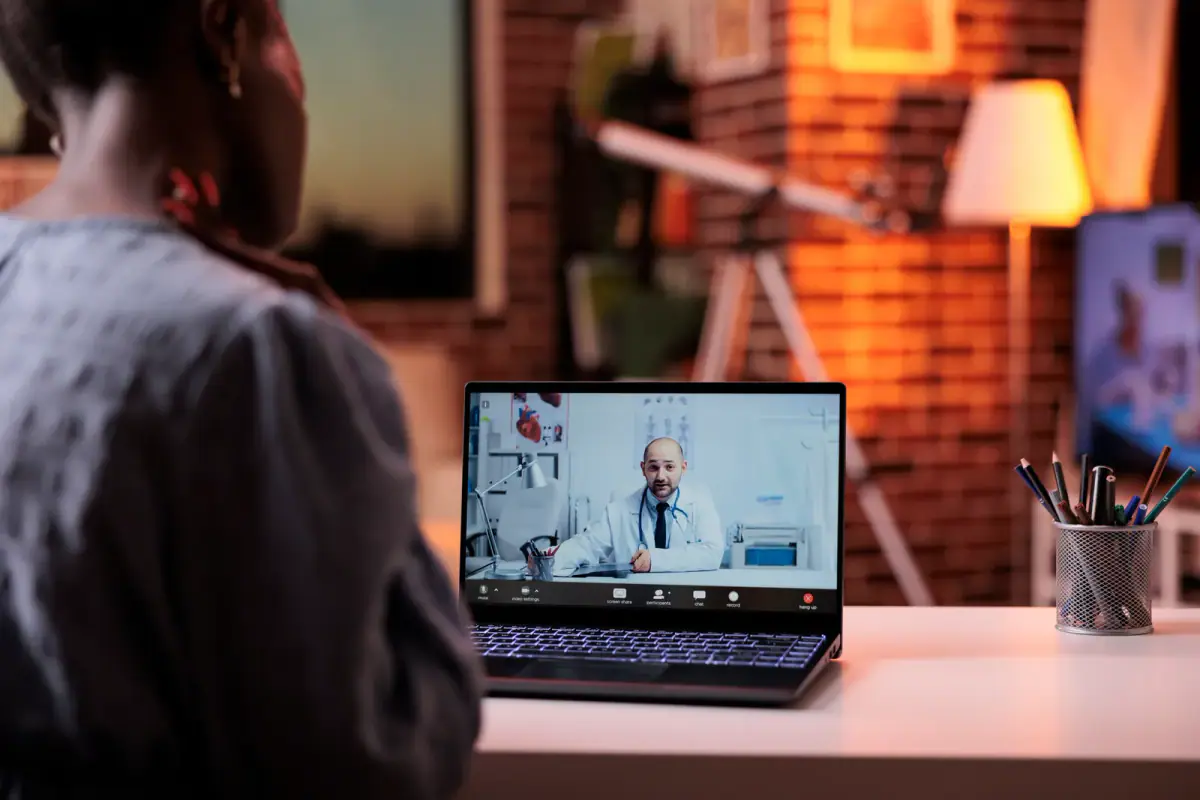
A hybrid PT practice reserves rented room hours for hands-on care and testing, and moves follow-ups, program changes and check-ins to video, which keeps the room bill low and the patient’s week simple. The split is a choice you make visit by visit, inside your license and your board’s telehealth rules. If you use a private room for physical therapists for the hands-on half, this page covers what each half needs.
Decide which visit belongs where
| Visit type | Usually in the room | Often fine on video |
|---|---|---|
| First evaluation | Yes, for hands-on testing | Sometimes a pre-visit intake call |
| Hands-on treatment | Yes | No |
| Testing and measurement | Yes | Limited |
| Program progression | Optional | Yes |
| Check-in after a flare | Depends | Often |
| Discharge review | Optional | Yes |
The right column is a planning aid, not clinical advice. Your license and board rules decide, and a patient who is not improving or reports something concerning moves to the room, or to their physician, immediately.
The video side in a rented room
Treat the room as a studio with four requirements.
- Quiet. A closed door and low music, or none. Check noise during a tour.
- Light. Even, in front of you, with controllable lighting to remove shadows from the face. FlexSpaces offer controllable lighting.
- Connection. All FlexSpaces have WiFi; run a speed test during your first visit and keep your phone as a backup.
- Camera angle. Show the patient enough floor to watch a movement. A phone on a stand beside the TV or monitor does it.
FlexSpaces are deliberately filming-friendly and carry a TV or monitor, which lets you show a program on a big screen next to your camera. How online coaches use the same features is in the online coach and in-person space answer.
A weekly rhythm
A pattern many hybrid practices try is one or two booked blocks for in-person patients, with video follow-ups placed before or after on the same days. That limits room hours to the blocks and puts remote visits where the room is already booked, so you are not driving or setting up for a ten minute check-in. A short remote visit can be done at the end of a block, in the same private room.
What to settle before launch
- Licensing rules. Confirm what Indiana’s board and your own rules say about telehealth and about treating patients you see in person and remotely. Indiana’s physical therapy direct access rules, including the 42 day window, are covered in this answer.
- Platform and privacy. Choose a video tool your own compliance review accepts, and tell patients how it works.
- Consent. A short written consent for remote care.
- Documentation. Record video visits as completely as in-person ones.
- Emergency plan. Know the patient’s location and a local emergency number before starting.
Cost shape
Room cost is the fixed cost, so cut it by keeping remote visits remote. At FlexWerk, rooms book by the hour from $18 to $22 through the app, with no lease or membership, and fitness professionals get a first free hour through get started. Compare it with a mobile model in mobile PT versus a rented room. Each PT sets their own fees, and FlexWerk provides the room and no clinical services.
Run a test week
Book two hours, do your in-person visits in the first hour, run two video follow-ups in the second from the same room, and note setup time, sound and light. Adjust the layout before the next week.
Related questions
Can any visit be done by video?
No. Whether a visit can be done remotely depends on your license, the patient and the clinical need, so check your board's telehealth rules and use your judgment visit by visit.
Do I need a separate room for video?
Not necessarily. Many PTs book rented hours for both, and do the video follow-ups from the same private room. What matters is quiet, light and a stable connection.
How do I keep video visits private?
Use a secure platform that your own compliance review accepts, work behind a closed door and keep the patient's view free of other people.