
Invoice vs Autopay for Training Clients: Which Gets Paid?
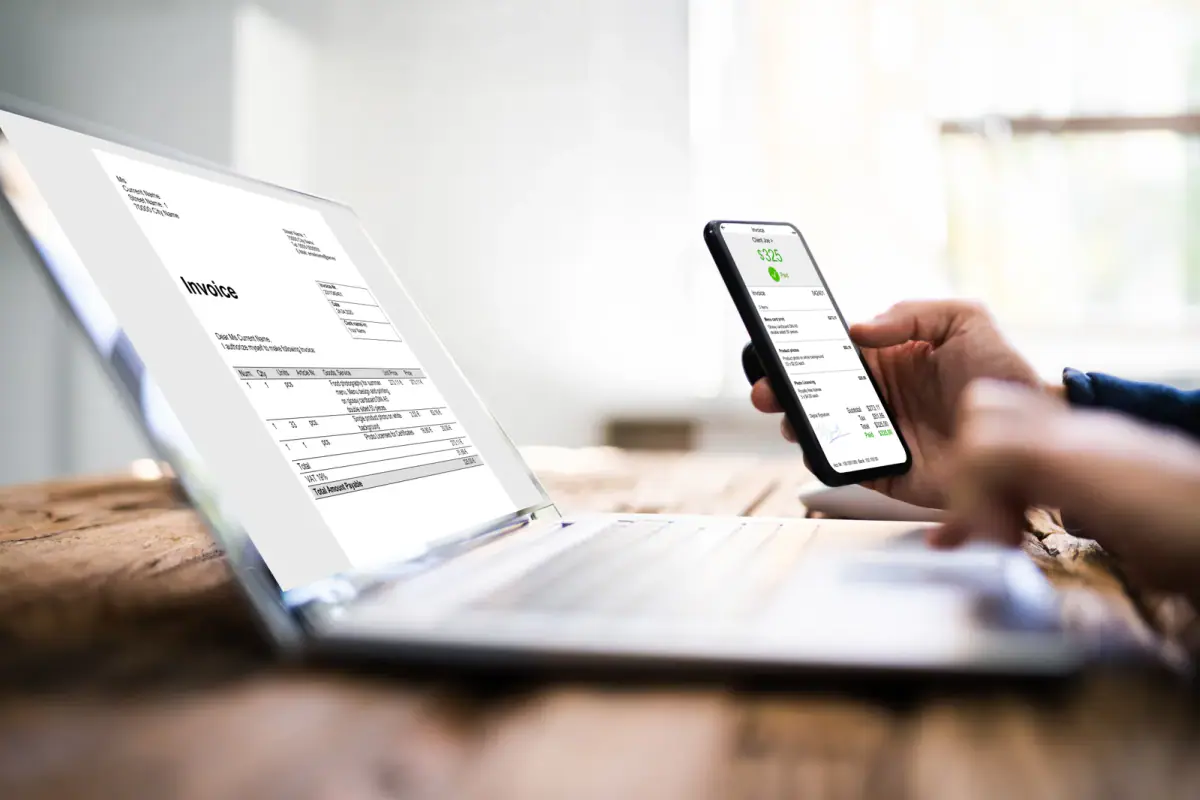
For a roster of recurring clients, autopay gets paid faster and with less effort than invoicing, and invoices earn their place only for one-off or corporate payers. The difference shows up in days to cash, in admin minutes and in conversations you would rather not have. If you are still choosing space for those sessions, fitness professionals get a first hour free.
Days to cash on a 15-client roster
Take 15 clients at $400 a month, $6,000 in all. The delay and effort figures below are assumptions to replace with your own history.
| Invoice by hand | Autopay | |
|---|---|---|
| Average days from due date to money | 6 (assumed) | 0 to 3 for processing |
| Late clients each month | 4 (assumed) | 0 to 1 declined card |
| Minutes of admin per client | 8 | about 1 |
| Admin hours per month | 2 | a few minutes |
| Reminder messages per month | 5 or 6 | 1 or 2 |
On those assumptions, about $1,600 of the month sits unpaid for roughly a week while you write reminders. Over a year, you spend around 24 hours on collection alone, and that is before counting how it feels to ask a client you like for money.
The awkward conversation cost
Each late invoice forces a choice: remind the client again, let it slide, or stop booking them. Every option costs something. Autopay moves that conversation to the sign-up, when the client agrees to the terms in the abstract, rather than the sixth of the month, when you are asking about a specific missed payment.
The decline case is different and gentler: a failed card is a technical event, so the message is “your card did not go through, here is a link to update it,” with nothing personal in it.
What autopay still needs
- A written authorization with the charge date and amount.
- A retry window and a booking pause if payment does not clear.
- A receipt sent after each charge.
- A way for the client to update the card without calling you.
The terms around pauses and rollover are in recurring billing for personal training.
When an invoice is the better choice
- One-off purchases such as an assessment or a single workshop.
- Corporate clients whose finance team pays by purchase order.
- Clients who need to pay by bank transfer rather than card.
- A new client you want to see pay once before storing their card.
Which rail you collect on changes your fees too, which the ACH versus card comparison sets out in dollars on a $600 payment. For a large prepaid package, see splitting it into installments.
Reading your own numbers before you switch
The assumptions in the table are placeholders, so replace them with three measurements from your last three months. First, how many invoices were paid after the due date? Second, how many reminders did you send in total? Third, how many days passed between due date and money for the slowest client? Those three figures turn a general argument into your own. If you find that only one or two clients are ever late, a full migration may not be worth the setup time, and moving just those two to autopay solves most of the problem. If late payments are spread across the roster, moving everyone on a single billing date is the cleaner fix and also gives you one predictable deposit day each month.
A migration plan that takes a week
Pick the next billing date, email the roster the new terms two weeks ahead, and move the clients who reply yes first. Leave the rest on invoices for one more cycle. Pair it with a business bank account so the deposits reconcile cleanly, and book your sessions in hourly rooms through your free first hour if you are still choosing space.
Related questions
Do clients object to autopay?
Fewer than trainers expect, when it is explained at sign-up with the charge date and the cancel steps. Surprise is the problem, not the method.
Can I use both?
Yes, and many trainers do. Autopay for the recurring roster, an invoice for one-off purchases, corporate clients and anyone who asks to pay by transfer.
What is a fair late-payment rule for invoices?
Due on receipt or within seven days, a friendly reminder on the due date, and a pause in booking after a second reminder. Write it in the agreement so the pause is policy, not a mood.