
How Long Should an Assisted Stretching Session Be?
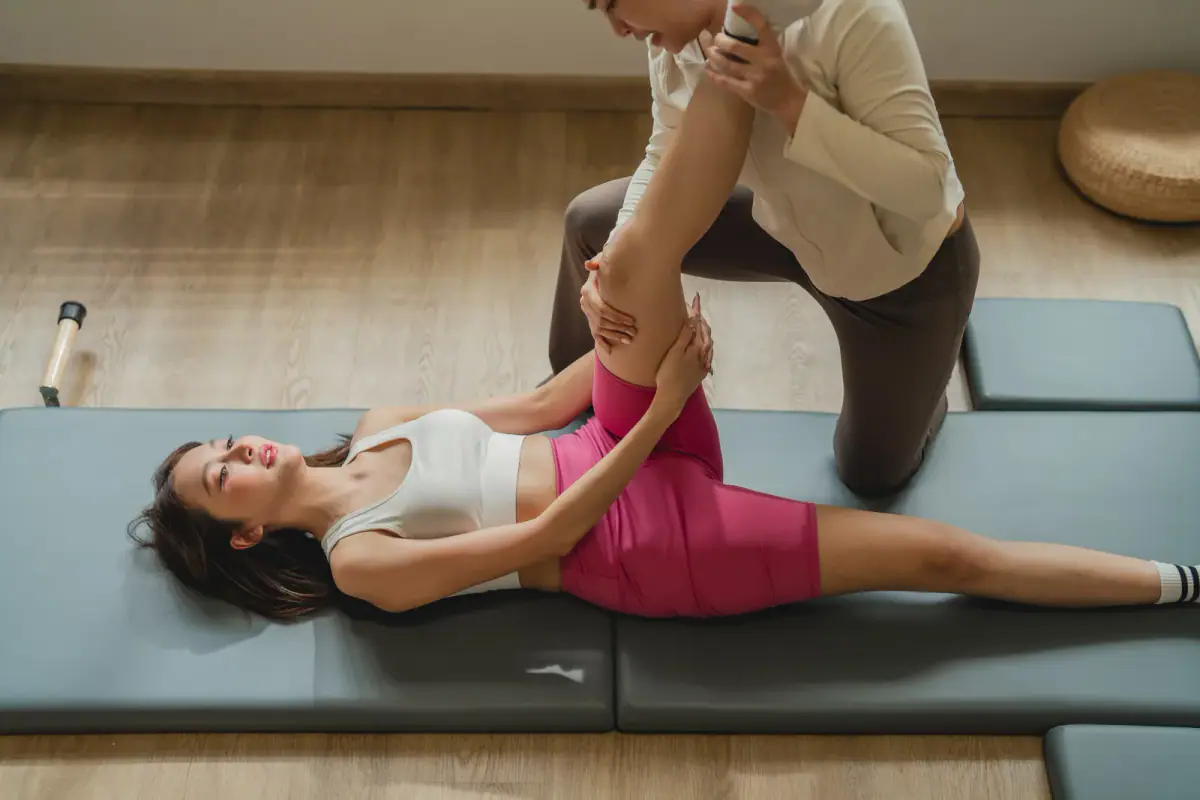
An assisted stretching session should usually run either 25 minutes for one focused area or 50 minutes for a full body routine, and the right choice depends on the goal, the booking block and your rate rather than on a universal standard. There is no official length; practitioners pick a format and defend it with results. If you are renting by the hour, the choice matters more than it seems, because it decides how many paying appointments share each booked private space.
The two formats compared
| 25 minute session | 50 minute session | |
|---|---|---|
| Best for | One region: hips, shoulders, upper back | Full body routine, first visits |
| Appointments per booked hour | Two, with a short reset between | One, with a ten minute buffer |
| Pace | Efficient, little room for conversation | Unhurried, room to breathe between holds |
| Pricing logic | Slightly above half the longer rate | Anchor rate for the service |
| Typical client | Desk worker, post workout tune up | Someone treating the visit as recovery time |
Neither is better in the abstract. The shorter session is easier to sell as a habit, since a client can slot it before work. The longer session is easier to sell as an experience, because it feels like a break from the day.
How length changes the room math
Rooms book by the hour, so the numbers are straightforward. A private room at FlexWerk in Carmel rents from $18 to $22 an hour, which is the cost you carry whether one client or two use that hour. Two 25 minute clients share the hour and halve the room cost per appointment; one 50 minute client carries it alone. Either way the room is a small line against a session fee, and that comparison is easiest to run in a calculator with your own numbers.
A worked illustration, with round figures you should replace with your own: if you charge $75 for the full session and a little over half of that for the short one, two short clients in an hour bring in more than one long client, but only if you can fill the second slot. An empty second half costs you the difference. That is the real risk of the short format, and it is why practitioners often start with the 50 minute session and add the 25 minute option once demand is steady.
Rebooking: what actually brings clients back
Clients rebook when they can tell something changed. A session that ends with a clear before and after, such as reaching further in a seated forward fold or turning the head with less effort, earns the next appointment faster than extra minutes do. Pad a session to fill the time and you lose the pace that makes the change noticeable. Set a goal at the start, check it at the end, and let the clock follow the goal.
Practical habits that help rebooking:
- Name the focus area at intake so the client knows what to measure.
- Leave two minutes at the close to show one thing they can repeat at home.
- Offer the next appointment before the client leaves, with the time you would suggest.
- Keep a short note per client so the next visit starts where the last one stopped.
The physician line
Assisted stretching is wellness and mobility work, not treatment. A client who describes pain, a recent injury or a medical condition belongs with a physician or a licensed provider before a stretch appointment, and session length does not change that. Scope also matters for the service itself: Indiana’s massage therapy definition names stretching, so confirm with the state licensing agency how your format is classified before you sell it as a stand-alone product. The licensing answer lays out the code language.
Choosing your format
Use this if-then list:
- If your clients are desk workers who want a quick reset, start with 25 minutes.
- If clients are athletes or older adults who want to unwind, start with 50 minutes.
- If you run back to back appointments, add a five minute buffer to either format.
- If you have an empty second half in a booked hour, move the start time so the hours stack.
For pricing the formats against the local private range, what to charge for assisted stretching covers how a fee anchors to private premium rates. For the quiet space side of recovery work, a private mobility hour shows what a booked room feels like. If you want to test a format, a private hourly space is the lowest cost way to run one client through both lengths and see which one they ask for again.
Related questions
Is a 25 minute session long enough to feel a difference?
For one focused area, such as hips or upper back, usually yes. Clients tend to notice the change in the area you worked, while a full body goal needs the longer format.
Should I price the 25 minute session at half the 50 minute rate?
Slightly above half is the common approach, because intake, setup and notes cost the same whatever the session length. The rate page works through the numbers.
What happens if my client runs late and eats into the booked hour?
The room booking ends on the clock, so a late arrival shortens the stretch time rather than extending it. Many practitioners build a five minute buffer into the booking and say so in their policy.