
Pilates for Lower Back Pain: What an Instructor Can Promise
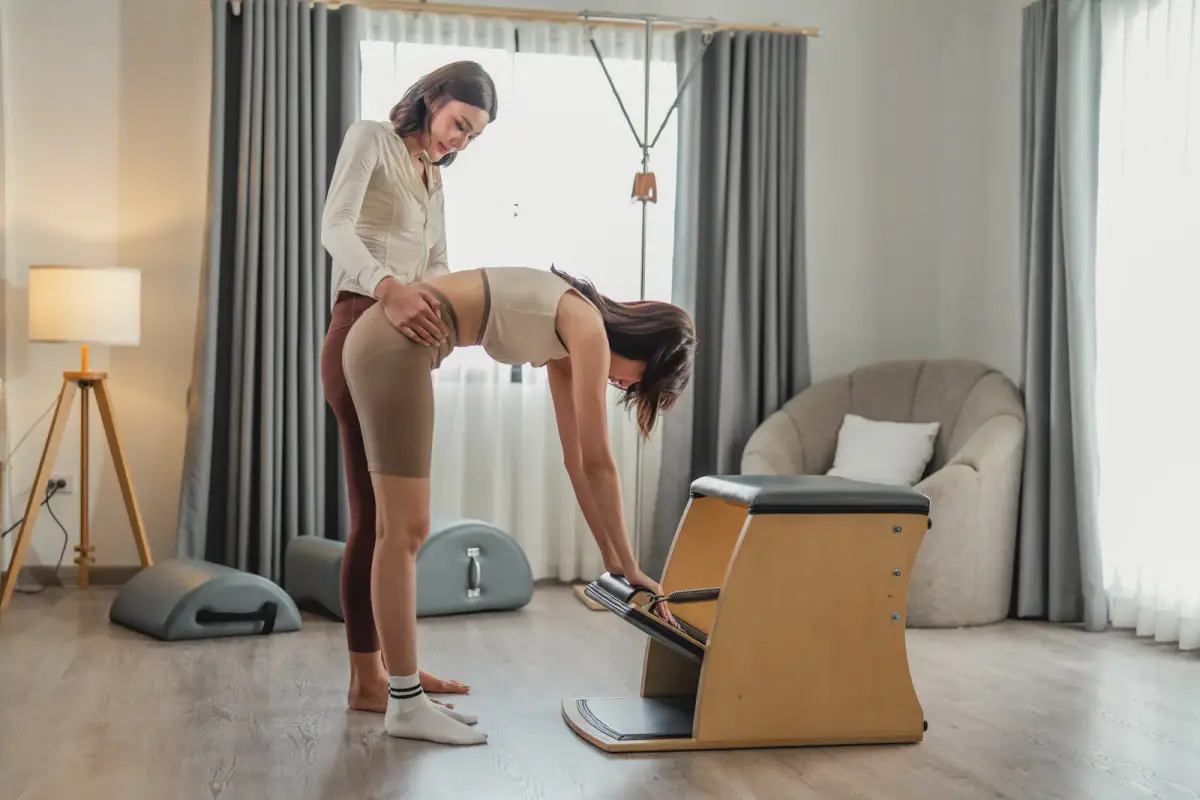
Before a client with lower back pain starts pilates with you, a physician or physical therapist should clear them to exercise, and what you can promise is a careful, well-coached session, never a treatment or a result. Your role is instruction, and the diagnosis, treatment and rehabilitation of pain belong to licensed clinicians. This page gives you plain language, a screening routine and a referral line for the clients who arrive with back pain, so you can work alongside their care instead of in place of it, whether you teach in a private rented room or elsewhere.
Know the edge of your role
Pilates instruction is not a medical service. A licensed physical therapist, physician or other clinician evaluates and treats a condition. An instructor teaches movement to a person who has been cleared to do it. Indiana licenses physical therapists and athletic trainers, and a facility that rents you a room is not a medical facility; the rooms at Carmel City Center are for training, not clinical care.
In practice this means three habits:
- You do not tell a client what is causing their pain.
- You do not describe your sessions as therapy, treatment or rehabilitation.
- You do not change what a clinician has told a client to do or avoid.
If you want a wider view of scope for trainers who work after a clinical episode, post-rehab training and what scope covers is the companion page.
Questions to ask a client’s physician first
Many instructors send clients to their clinician with a short list rather than guessing. A client can bring these to their doctor or physical therapist:
- Am I cleared to begin a general exercise program such as pilates?
- Are there movements, positions or ranges I should avoid for now?
- Is there anything I should stop and report right away?
- Would you like to see what a session involves before I start?
- When should I check in again?
Ask the client to bring back the answers, ideally in writing. If they hold a note from their clinician, keep a copy in their file with their permission.
A screening script you can use
At the first conversation, keep the language factual and brief:
- “Have you seen a doctor or physical therapist about your back?”
- “Have they cleared you to exercise, and did they give any limits?”
- “Is anything about your back changing, getting worse or new?”
- “Is there anything that makes you nervous about starting?”
Write down the answers in the client’s words. If any answer is unclear, if the pain is new or worsening, or if the client has not been seen by a clinician, pause. The respectful response is: “I’d like you to talk with your doctor first, and I’ll be glad to start when you’ve got the go-ahead.”
What to say, and what not to say
Language builds or breaks trust. Aim for descriptions of what happens in the session, not outcomes.
| Say | Avoid |
|---|---|
| “We will work at your pace and stop if anything feels wrong.” | “This will fix your back.” |
| “I teach movement; your doctor guides your care.” | “I can treat that.” |
| “Tell me right away if anything changes.” | “Push through it.” |
| “Let’s check in with your clinician if that continues.” | “That’s just a muscle thing.” |
Keep your marketing to the same standard. A page or post that suggests you treat back pain invites the wrong clients and the wrong expectations. Describe your classes by what you teach and for whom, such as “pilates for adults returning to exercise,” and leave medical claims out.
Referral rules that protect everyone
Set a few rules for yourself and follow them every time:
- No client with a new, unexplained or worsening back complaint starts or continues until a clinician has seen them.
- Stop and refer if a client reports sharp, shooting or worsening pain, numbness, weakness or anything alarming during a session.
- Keep a short log of what you taught, what the client reported and any referral you made.
- Hold a professional liability policy that matches what you teach; the pilates instructor insurance cost page lists what to ask a broker.
If a clinician is willing to co-ordinate, a brief note with their approved limits can turn you into a trusted next step for their patients. Offer to send a description of a typical session and let them decide.
Fit the practice around the boundary
Many instructors build private practices around adults who want a gentle return to exercise, and who often have backs that complain. Serving them well is mostly good screening, good listening and good referral habits. Spaces at FlexWerk rent by the hour with no lease, so you can offer private sessions without a studio’s overhead, and you keep what you charge; how to set that rate is covered separately. Start by writing your screening script, keep it on a card and use it on your next inquiry.
Related questions
Can I tell a client that pilates will fix their back pain?
No. Promising a cure or a treatment outcome is outside an instructor's role. You can describe what the sessions involve, support a client whose clinician has cleared them to exercise, and refer out anything that sounds like a medical question.
What should I ask a client who mentions back pain?
Ask whether a doctor or physical therapist has seen them, whether they have been cleared to exercise and whether anything has been restricted. Ask what makes things worse, and stop if anything in the answer sounds new or alarming.
When should I stop a session?
Stop if a client reports sharp, shooting or worsening pain, numbness, weakness or anything that frightens them. Do not try to work through it, and send them back to their clinician.