
Run Club Strength Partnerships: The Clinic Model
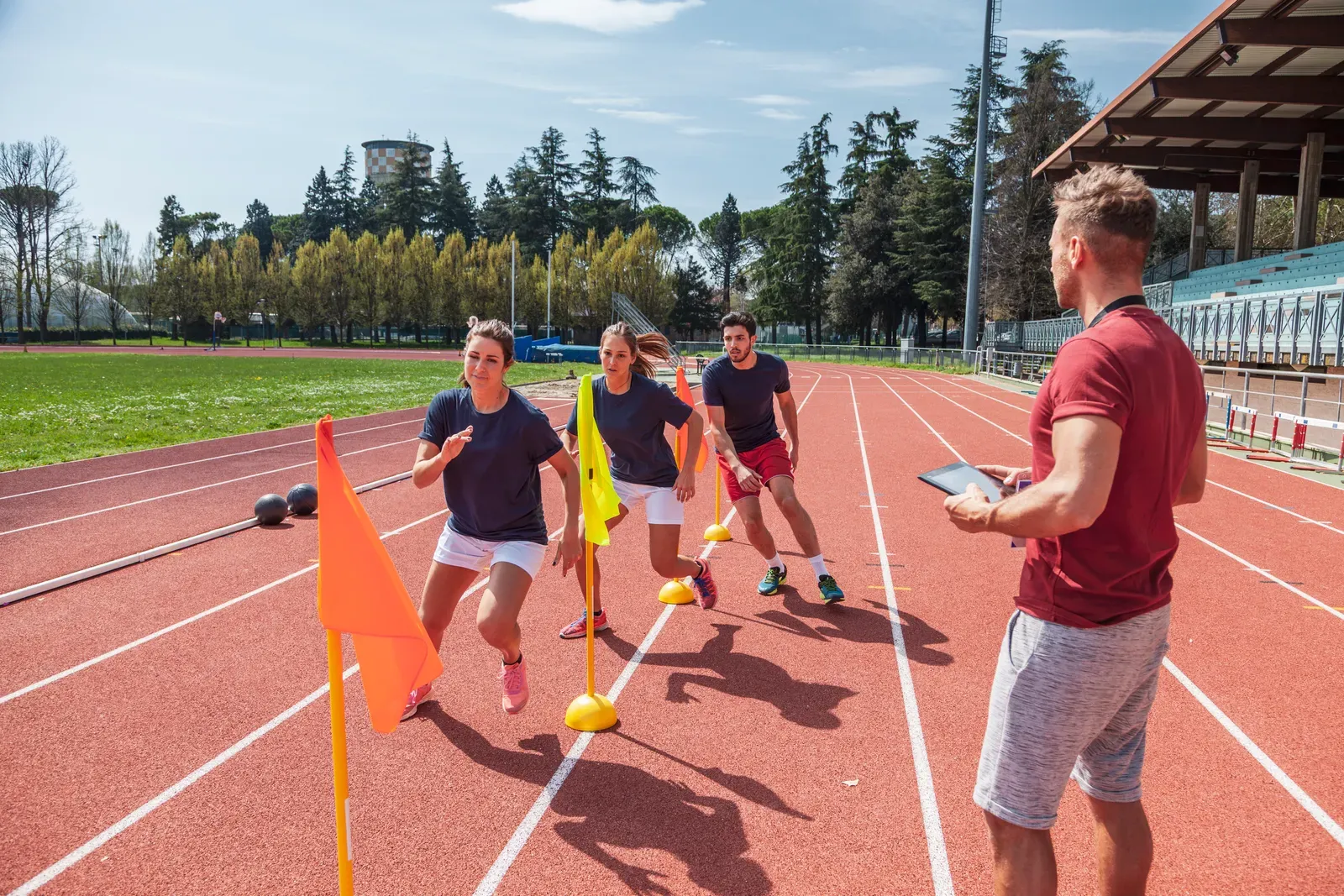
The way into a run club is a strength clinic, not a request for members: a monthly session the club promotes, you teach, and runners attend because it is useful, which then feeds small strength pods that are the actual business. Near the Monon, where runners already gather, the pods run in a private room at FlexWerk in Carmel City Center, and a fitness professional’s first hour is free.
Why the clinic beats the ask
Run club leaders field pitches constantly and say no to almost all of them, because most pitches ask the club to hand over its members. A clinic reverses the direction: you give the club a program its members want, the club looks good for providing it, and you get sixty minutes in front of forty runners who now know your name and your cueing. The leader risks nothing, and you get the audition that no flyer or feed post can buy.
The pitch is one message: “I would like to run a free strength clinic for your members once a month, forty-five minutes after a group run, on the topic they ask about most: the strength work that keeps a training block from ending in an injury. I bring bands, a plan, and my insurance certificate. You bring the runners.”
What a clinic a run club will host looks like
Keep it teachable in a parking lot, a park shelter, or wherever the club meets, because the clinic has to travel to the club, not the other way round. A working format:
- Ten minutes of why: the three qualities most recreational runners never train, single-leg strength, hip and trunk control, and calf capacity, and what each protects.
- Twenty-five minutes of doing: split squats, hinges, calf work, and carries with bands and bodyweight, coached in a circle so you can see everyone.
- Ten minutes of homework: a two-exercise routine on one card, plus the pod offer.
Runners leave with something they can use on Tuesday and a reason to want more of it. The clinic is deliberately the thing you cannot fully deliver outdoors, and the running coach’s strength and treadmill practice is what the room adds once a runner wants the full version.
Time clinics to the race calendar
Runners decide how to train twelve to sixteen weeks before a goal race, so schedule clinics to land in those windows. The local calendar gives you four: the Monumental Marathon in downtown Indianapolis on Saturday, November 7, 2026, so a mid-July to early August clinic; the Carmel Marathon Weekend in mid-April 2027, so a January clinic; the Indy Mini on Saturday, May 8, 2027, so a late January or February clinic; and the Geist Half Marathon in Fishers each September, hilly and bridge-heavy, so a June clinic on hill strength. Add the Indiana Women’s Running Festival in Carmel, checking the race site for this year’s date. Winter clinics can move indoors, and the solo runner’s version of that winter block, curved treadmill intervals in a private cardio room, is covered in indoor running training in Carmel.
From clinic to strength pod
The pod is the conversion. Three or four runners who already train together book a six-week block, one session a week in a FlexSpace Plus, 200 square feet with a rack, cable system and dumbbells, and each enters free as your guest. You bill the pod as a block per person, keep every dollar, and pay $18 to $22 for the hour. Weekday doors open at 5 AM, which suits runners who lift before a 6 AM group run, and the Monon Greenway runs steps from the door, so a pod can finish its strength hour and start its run without moving the car. The booking mechanics for group formats are in renting space for small group classes.
Track two numbers per clinic, attendance and pod sign-ups, and adjust the topic, not the price, when the second number lags.
Bring the clinic outline to the club leader this month, book the free first hour to rehearse the pod session, and let the first clinic fill the first pod.
Related questions
How many runners can I train at once in a private room?
Up to four in a FlexSpace Plus, which is why the pod format fits run clubs so well. Training partners who already run together sign up as a group and split a block price, and each enters free as your guest.
Should the clinic be free?
Free or close to it for the first few. The clinic is the club's benefit and your audition; the pods are the product. Some clubs will sponsor a small fee per head or cover the space, which is worth asking about once the first clinic fills.
What if the run club already has a coach?
Better. The running coach owns mileage, pacing and race plans; you own strength, single-leg control and the work runners skip. Say that split out loud at the first meeting and the coach becomes your referral source rather than your rival.