
Workout Classes vs Training Alone: Which Suits You?
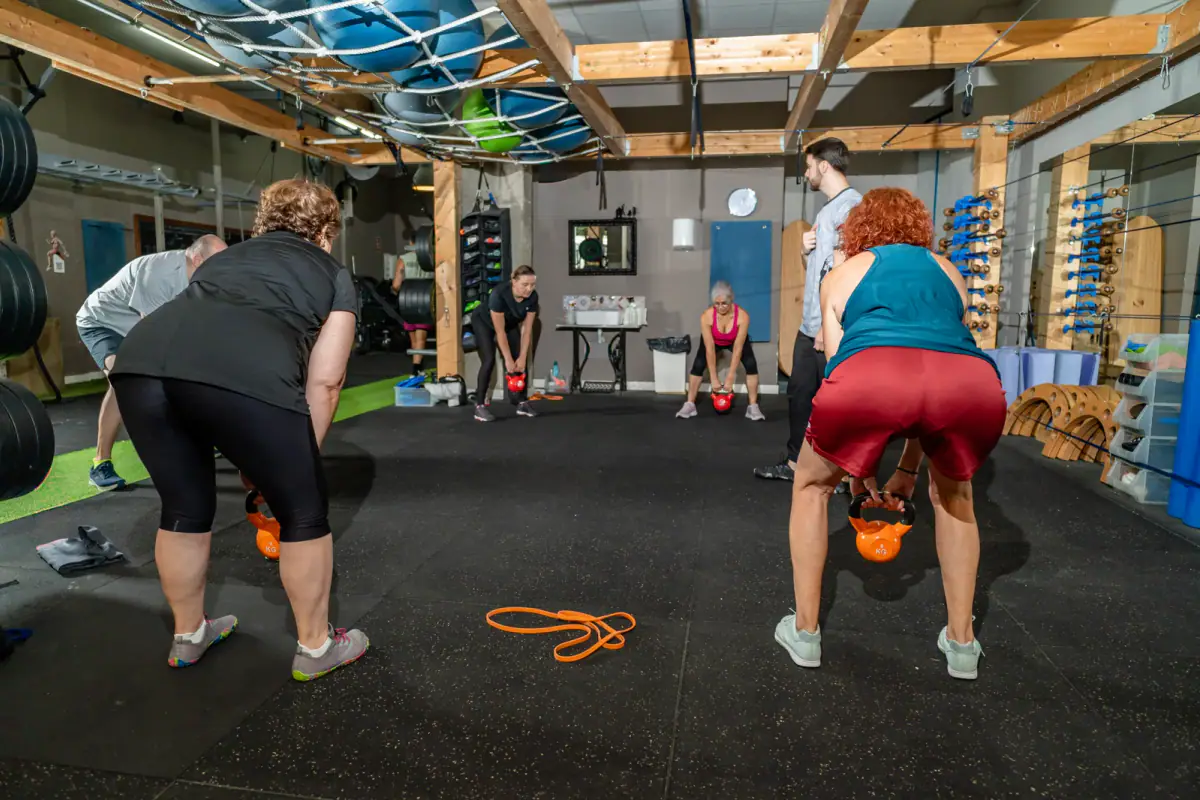
Choose workout classes if you need energy, structure and other people expecting you, and choose training alone, perhaps in a private room, if you want control of the plan, the pace and who sees you. A class does the thinking for you and makes skipping awkward. A solo hour hands you all the decisions, along with all the freedom. Neither is the more serious option.
What a class gives you that you cannot easily build alone
A good class brings four things:
- A set time. The session starts whether or not you feel like it.
- A leader. Someone else chooses the exercises and the pace.
- Other people. The room’s energy can lift an effort you would not push alone.
- A social anchor. Some people stay because they like the faces.
Those are real benefits, and they matter most for people who struggle to begin on their own.
What training alone gives you that a class cannot
Solo training trades structure for control:
- Your schedule. No fixed timetable to rearrange your week around.
- Your plan. You can lift heavy, work on a weak point or repeat a movement until it clicks.
- Your privacy. Nobody watches you struggle, and nobody comments.
- Your pace. You can rest as long as you need.
For people who dislike being watched, a gym for people who hate gyms explains why the shared format is the problem and not the exercise.
A quick way to choose
Answer honestly.
- Do you start workouts without outside pressure? If no, lean toward classes.
- Do you dislike being watched or compared? If yes, lean toward solo.
- Is your weekly schedule fixed or unpredictable? Fixed suits classes, unpredictable suits solo.
- Do you know what to do with an hour of equipment? If no, a class or a short coached block teaches you first.
- Do you want to lift heavy or follow a specific program? If yes, solo gives you the equipment time.
If you answered mostly “lean toward classes”, try one for a month. If mostly solo, book a room and test it.
The honest downsides of each
Classes can be the wrong pace for you, whether too fast for a beginner or too easy for an experienced lifter, and you rarely get individual correction in a full room. Missing a class you paid for can feel like wasted money, and the schedule may not suit a changing work week. Training alone has the opposite weaknesses: nobody notices if you skip, nobody corrects your form, and it is easy to repeat a comfortable routine for months. Knowing which weakness you are more prone to is the most useful thing you can learn from the quick choice above.
How a booked room fits
A private workout space turns the solo option into something close to a class in commitment, because the time is booked and you show up for a reservation. It is a middle path for people who need an appointment but not an audience. Rooms cost $18 to $22 an hour for strength and from $12 for cardio, with no membership, which means you can keep a weekly class and add a single booked hour for your own work. If you are weighing the cost of ongoing fees, what to do instead after cancelling a gym membership is a useful companion.
What to try first
Run a two-week experiment. Take two classes in the first week and book one private hour in the second, and note how you felt, how consistent you were and what each cost. A host can set up your first booking at (888) 353-9975, and anyone 18 or older and local to Carmel can ask about the free first hour. For a third path, a personal trainer versus training alone compares coaching with going solo.
Related questions
Which is better for losing weight?
Neither format wins by itself. The better one is the one you will do consistently for months, alongside nutrition and sleep. A clinician can advise if you have a health condition.
Do I need experience to train alone?
A little helps. If you are new to lifting, start with a short learning phase, because a class can teach pacing while a private room lets you practice without an audience.
Can I use a private room and still take classes?
Yes. Nothing about booking a room by the hour stops you from attending a class elsewhere, and many people use both to cover different needs.