
Osteoporosis Exercise Class Space in Carmel
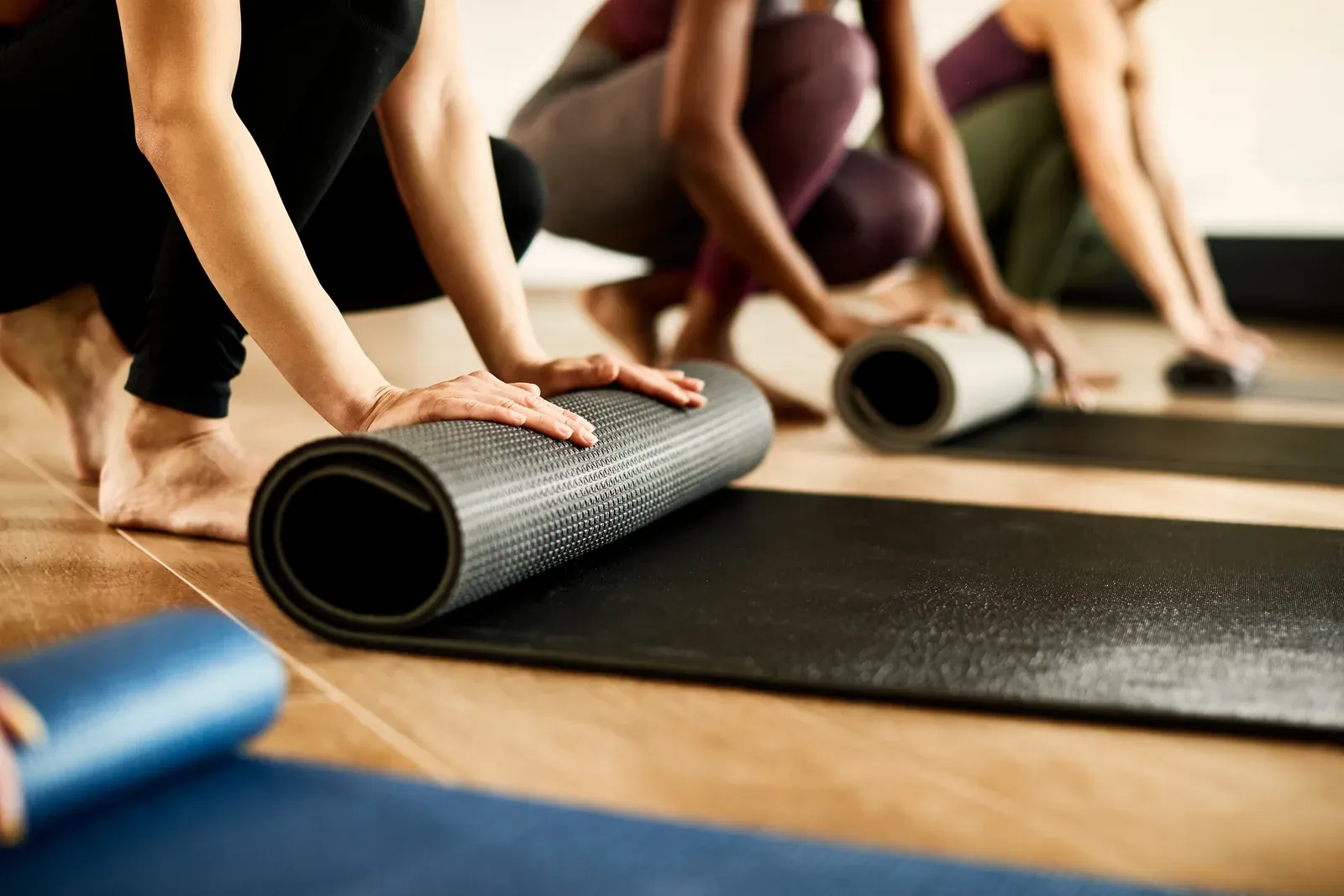
Osteoporosis and low bone density classes work best small, two to four people, where an instructor can actually watch every rep for balance and loading. A crowded studio floor makes that kind of close supervision nearly impossible once a class grows past a handful of participants. A private room at FlexWerk in Carmel caps naturally at a size that suits this population, and a fitness professional’s first hour in it is free.
Why four people is the ceiling, not forty
Weight bearing and resistance work is commonly recommended for bone health, and both depend on an instructor catching small errors, a knee drifting inward, a rushed rep, a lost balance point, before they become a fall risk. That level of attention does not scale to a large group. A FlexSpace Standard, at about 150 square feet, suits one or two participants who need close one on one coaching, while a Plus, at about 200 square feet, holds a small class of up to four without crowding the room or losing sightlines to any one participant.
A room built for careful movement, not a crowd
The floor stays open and uncluttered unless equipment is actively in use, which matters for a population where a stray obstacle is a real fall hazard rather than a minor inconvenience. Lighting is adjustable, bright enough for an instructor to watch form closely rather than working in a dim, atmospheric room built for a different kind of class. When resistance work fits the program, a custom lifting rack, a cable system, and dumbbells are already in the room, so progression happens without hauling equipment in or improvising with what a participant happens to own at home.
Keeping the class in a coaching lane
An instructor programs the exercise; a physician manages the diagnosis. Bone density results, medication questions, and fracture risk assessments stay with a participant’s own doctor, and the class itself focuses on movement, balance, and consistent attendance rather than any claim about outcomes. That boundary matters more with an older or medically complex group than with almost any other population an instructor might train, and it is worth restating at the start of every new cohort rather than assuming everyone already understands it. A corrective exercise specialist working from an identical room draws the same line for assessment based sessions.
Why privacy matters as much as safety
Many participants in a bone health class are self conscious about a fall history, a stooped posture, or simply being the oldest and slowest person on a crowded gym floor, and that self consciousness keeps a lot of people from ever signing up for a public class in the first place. A closed door changes that calculation. The same small group meets in the same private room every week, with no one outside the class watching, which tends to build the kind of consistent attendance that actually produces results over months rather than a single well attended first session that never repeats. An instructor who has struggled to retain participants in a larger, more public setting often finds retention easier once the class feels genuinely private.
Running the class without a studio lease
A recurring weekly class books the same private room every time through the app, with no lease or monthly minimum standing behind the arrangement. That flexibility matters for a class that might start with three participants and grow slowly by word of mouth, since the cost scales with the hours actually booked rather than a fixed classroom rent working against a small roster in its early months. A kettlebell instructor running a very different small group format from the same kind of room shows the model working across a wide range of class sizes and intensities.
What a session actually costs to run
Expect $18 to $22 for an hour in the room, with no membership fee riding along underneath it, and cardio spaces from $12 for any instructor who wants a curved treadmill or rower available for low impact conditioning alongside the resistance work. A diabetes prevention coach building a weekly cohort from a nearly identical room faces the same predictable, hour by hour cost, which is the real advantage of this format over signing a lease for a dedicated studio before a class roster even exists.
Book the free first hour, run one real class with two or three participants, and let the room’s size prove itself before committing to anything larger.
Timing a class around the people who need it most
Many participants interested in a bone health class prefer daytime hours over evenings, since evening drives in poor light or winter weather add a fall risk of their own before a class even starts. A weekday late morning or early afternoon slot, well inside the facility’s 5 AM to 9 PM weekday window, tends to suit this population better than a class squeezed into the evening rush that most gyms default to. Weekend mornings from 7 AM to 4 PM offer another option for participants whose adult children or caregivers can only drive them on weekends. Garage parking a short walk from the door also matters more for this group than for almost any other class an instructor might run, since a long walk from a distant lot is its own small barrier to regular attendance.
Related questions
How many people fit in the room for a bone health class?
A FlexSpace Standard fits one or two people for close individual coaching, and a Plus fits up to four, a realistic ceiling for a class where the instructor needs to watch every participant's form and balance.
Does FlexWerk provide any bone density testing or clinical assessment?
No. FlexWerk provides the private room and equipment. Bone density results and any diagnosis stay with a participant's own physician; the instructor programs weight bearing and resistance work within their own certification.
What does booking the room cost?
Expect $18 to $22 for an hour in the room, with no membership fee riding along underneath it, and cardio spaces from $12 for anyone adding low impact work.