
The Real Cost to Open a Yoga Studio
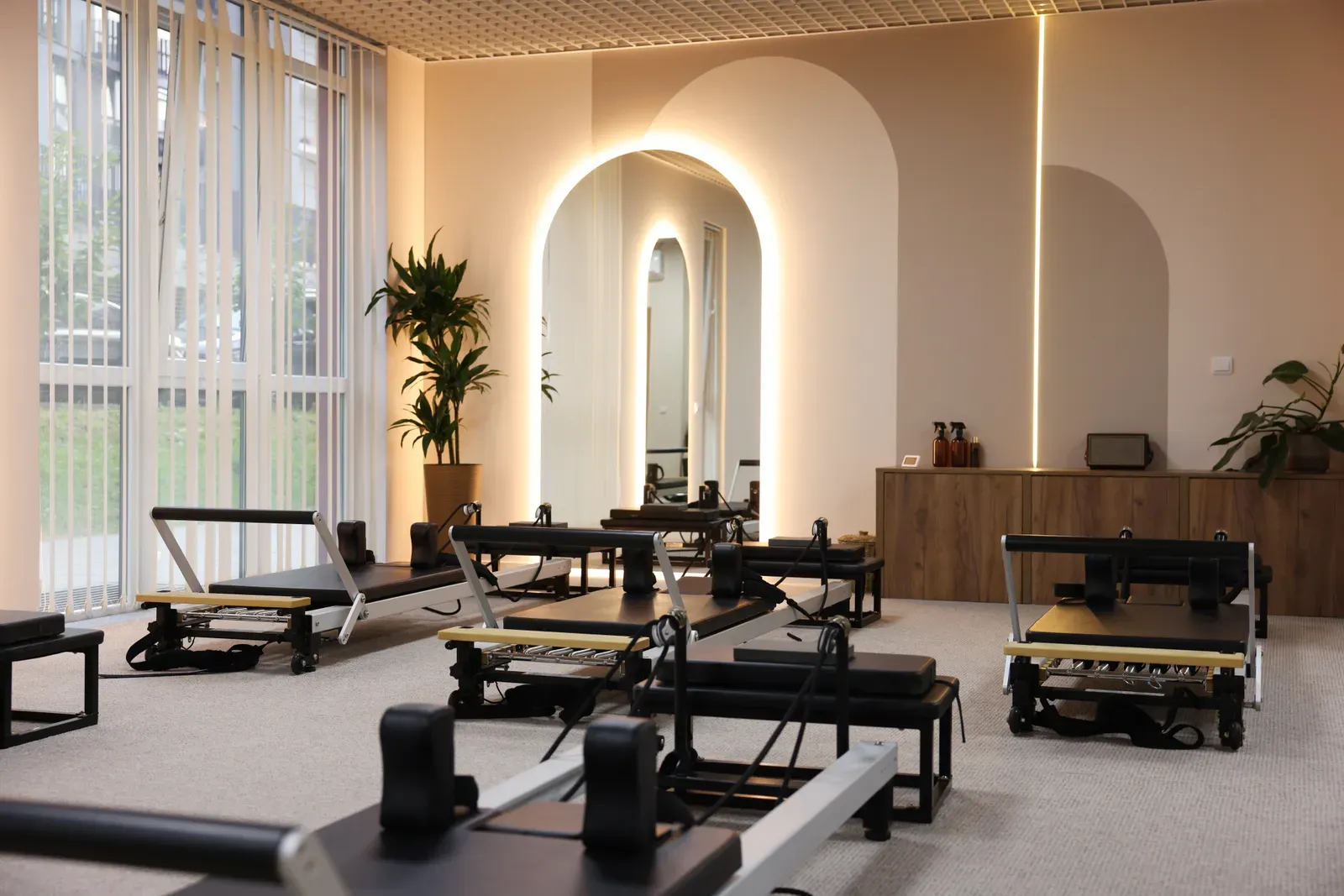
Opening a small yoga studio typically lands in the same six-figure territory as any boutique fitness buildout, but the money is weighted differently: light on equipment, heavier on the room itself, especially if heated classes are part of the plan. Run the comparison against hourly private space before signing anything, because the two paths solve the studio question in genuinely different ways.
Where a yoga studio’s money actually goes
Reformers dominate a pilates budget, a yoga studio skips that line almost entirely, since mats, blocks, straps, and bolsters cost a fraction of what a room full of apparatus does. What replaces it is the room itself: flooring that cushions joints through an hour of standing and kneeling work, sound treatment so one class does not bleed into the next, and enough prop inventory to outfit a full room of students rather than one traveling teacher’s bag. Add the standard studio costs no format skips, insurance, booking software, signage, marketing, and a lease that typically runs several years with the owner’s name attached, and even a modest buildout adds up quickly. The broader personal training buildout math walks the same categories for a strength-focused space.
The heating question a pilates studio never has to answer
Here is where yoga studio economics genuinely diverge from every other boutique format: a heated room is a real infrastructure cost, specialized HVAC or radiant heating, humidity control, and the maintenance that comes with running a room at a sustained high temperature for classes back to back. A studio built around hot formats is budgeting for equipment that a pilates studio, a strength studio, or an unheated yoga practice never needs to price at all. Teachers whose format stays unheated skip this cost entirely, and it is worth deciding which kind of studio you are building before the buildout estimate comes back, not after, since retrofitting heat into a room built without it later is considerably more expensive than planning for it, or deliberately against it, on day one.
The teacher roster costs a solo practice never carries
A studio built around a full class schedule needs more than one teaching voice to cover the week, which means payroll or contractor payments layered on top of rent, insurance that extends to every instructor teaching under the studio’s name, and the administrative work of scheduling, substitutes, and format consistency across a roster instead of one person’s calendar. A solo or small-group practice skips this cost structure entirely, since the only teacher whose time needs pricing is your own, and the only schedule that needs managing is one person’s.
The timeline cost nobody puts on the spreadsheet
Between signing a lease and teaching a first class sits a gap that most first-time owners underestimate: permitting, buildout, flooring installation, and if a heated room is part of the plan, the added inspection and calibration time that comes with new mechanical systems. Every week in that gap is rent paid against zero tuition revenue, and a studio that budgets buildout cost but not buildout time routinely runs out of cash before the schedule ever fills. Planning six to eight weeks longer than the contractor’s first estimate is a cheap habit that saves a real amount of money.
The overhead that does not care how full your class is
Once the doors open, the lease bills the same amount whether five students show up or twenty five, and that fixed number is what actually determines how many class spots need to sell before a month breaks even. A studio that leans on workshops, trainings, and retail to pad revenue is often doing that specifically to cover a rent number that a smaller, private practice never has to carry in the first place, a pattern behind why boutique studios close early more often than owners expect.
Running the same practice through hourly private space
A teacher building a private or small-group practice rather than a full class schedule can run the identical work through a booked room instead of a lease, paying only for the hours actually taught, currently $18 to $22 for a strength-equipped room and from $12 for a cardio room, rather than for a room sitting empty between classes. The trade is real: a leased studio supports a full class schedule and a heated format if that is central to the brand, while a booked private room supports privates, duets, and small unheated groups well but was never built to run a dozen-person heated flow class. Weighing which model fits a specific yoga practice is easier once both sets of numbers sit side by side.
| Leased yoga studio | Hourly private room | |
|---|---|---|
| Startup cost | Commonly six figures | None |
| Equipment | Mats, props, minimal | Bring your own props |
| Heated formats | Possible, at real added cost | Not available |
| Teacher roster | Payroll or contractor cost | Just your own time |
| Class size | Full room, group pricing | Privates and small groups |
| Fixed monthly cost | Rent and overhead, always due | Zero |
Price a real month of your own teaching against both columns, buildout, staffing, and the timeline gap included, before deciding which studio you are actually building.
Related questions
Is a yoga studio cheaper to open than a pilates studio?
Usually, because the equipment line all but disappears, but the lease, buildout, and heating decision can still put total startup costs in similar territory once everything is counted.
Do I need a heated room to open a yoga studio?
No. Plenty of successful practices run entirely unheated, and skipping a heated room removes one of the largest and least predictable line items in the whole budget.
Can a yoga teacher skip the lease entirely?
For a private or small-group practice, yes, since a booked hourly room handles that format well. A full class schedule with a heated room genuinely needs a leased space built for it.