
MS Fitness Specialist Private Room in Carmel
Heat sensitivity is a real and commonly reported concern for people with multiple sclerosis, and the two things that help most, a private room and a flexible clock, are exactly what an hourly booking provides. A private room at FlexWerk in Carmel gives an MS fitness specialist a controlled, one client at a time space and an early hour schedule that sidesteps the heat and crowding many clients need to avoid, with a fitness professional’s first hour free.
Why heat and crowding matter for this population
Many people with MS report that symptoms feel worse with heat and exertion, which shapes almost every practical decision an MS fitness specialist makes about where and when to train someone. Indiana summers do not make that easier: humid afternoons commonly run into the upper 80s and 90s, and a packed gym floor adds its own heat load on top of the outdoor temperature. A private room removes the second variable entirely, and booking around the clock instead of a fixed class time removes a meaningful chunk of the first.
Scheduling around the clock, not just the room
FlexWerk opens weekdays at 5 AM, hours before a Central Indiana summer afternoon reaches its worst, and weekend hours run from 7 AM to 4 PM. Booking only the specific hour a session needs, instead of committing to a fixed weekly class time, means a specialist can chase the coolest, calmest part of the day for a client who needs it, and shift that window as the seasons change. That kind of scheduling control is difficult to get from a facility running its own fixed class schedule.
What privacy buys a client managing fatigue and balance
A closed door removes the crowd a client would otherwise have to navigate, along with the self consciousness that often comes with a visible gait difference, an assistive device, or a need for frequent breaks mid session. Lighting stays adjustable rather than fixed, which matters for anyone sensitive to bright, glaring rooms. A Parkinson’s fitness specialist working with a different neurological population from a nearly identical room relies on the same privacy for many of the same reasons, obstacle free space and a controllable environment above almost anything else.
Coaching lane and the referral line
An MS fitness specialist programs conditioning, pacing, and fatigue management within their own certification; a neurologist or physical therapist manages the medical side of the condition. Clients typically coordinate both in parallel, and any change in symptoms or a new medical concern routes back to that care team rather than getting addressed inside a training session. A neuro fitness specialist working from the same kind of room draws the identical line for stroke and other neurological histories.
What a session actually looks like
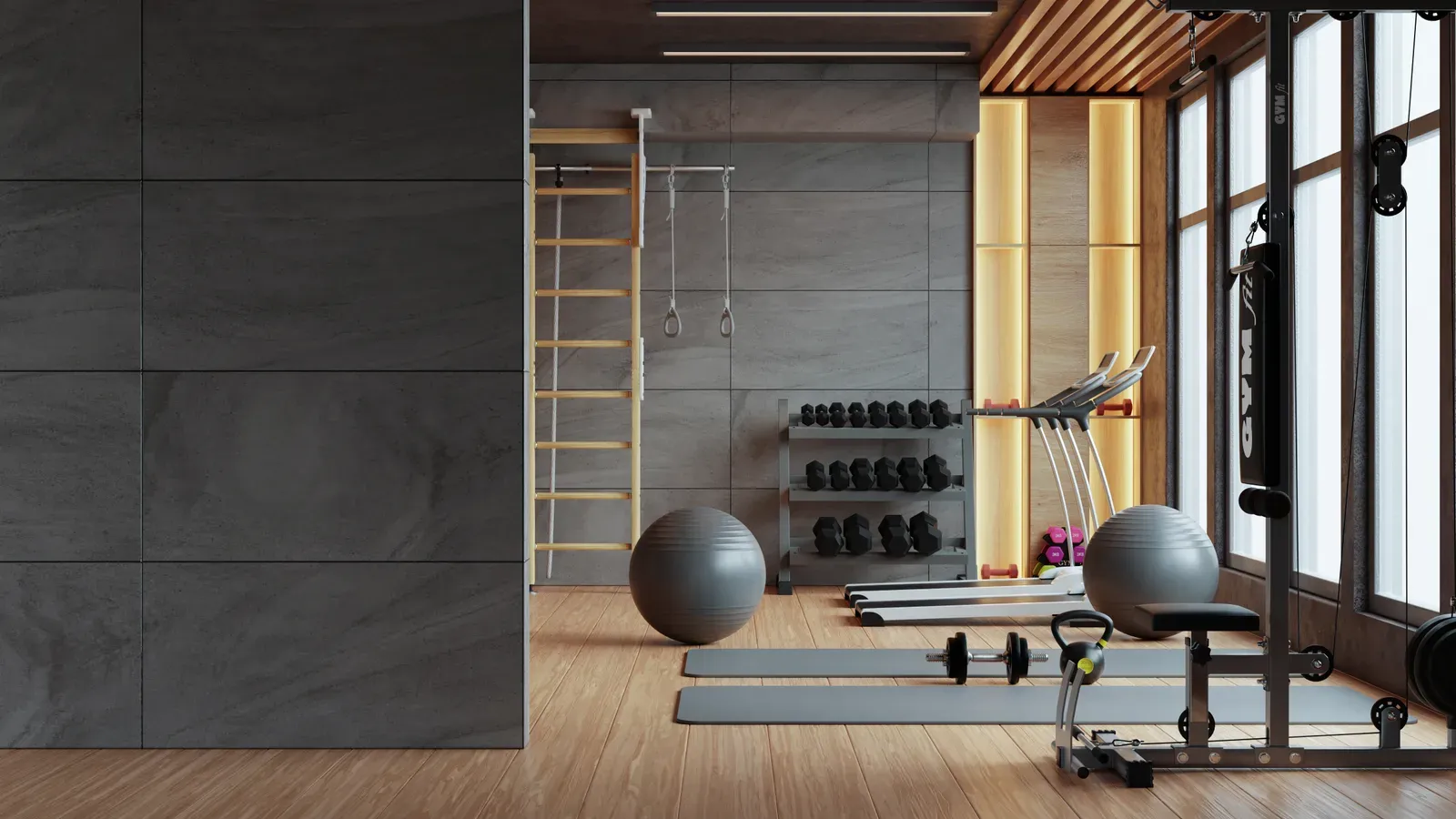
A typical session starts with a quick check on how the client is doing that day, since MS symptoms can shift noticeably from one visit to the next in ways a purely physical assessment might miss. From there, programming stays conservative and adjustable: shorter work intervals with real rest between them, exercises that do not depend on a fixed pace, and a plan that can be shortened on the spot if fatigue arrives earlier than expected. None of that requires special equipment beyond what the room already has, a rack, a cable system, dumbbells, and open floor, but it does require the freedom to slow down or stop without an audience noticing, which a private room provides by default.
What the room costs
Booking costs $18 to $22 an hour depending on the room, nothing more, with no monthly commitment attached to any of it, and cardio spaces run from $12 for specialists who want a curved treadmill or rower available for graded aerobic work. An autism fitness specialist relying on the same lighting and privacy controls for a completely different population shows how far a single, flexible room stretches across genuinely different client needs.
Book the free first hour early in the morning, before the day heats up, and judge the room by how a real client actually tolerates the session.
Talking with a client’s neurologist or physical therapist
A short note after a session, sent through whatever channel a client’s care team prefers, goes a long way toward building trust with the medical providers already managing a client’s MS. WiFi in the room makes that easy to do the same day, while details are still fresh, rather than trying to reconstruct a session from memory a week later. Over time, a specialist who communicates consistently with a client’s neurologist or physical therapist tends to receive more referrals from that same provider, since the provider can see the coaching is happening inside a clear, cooperative structure rather than working around their guidance.
Planning around a bad day without losing the week
MS symptoms can vary noticeably day to day, and a program built around a single fixed weekly class time forces a client to either push through a genuinely bad day or lose the session entirely. Booking hour by hour instead removes that pressure. A session can move to later in the week, shorten on the spot, or shift to a gentler format without any facility rule standing in the way, since nothing beyond the hour actually booked gets charged either way. That flexibility is often harder for a specialist to find at a facility running its own fixed class calendar, and it is worth naming directly in an intake conversation so a new client understands from the first session that missing or shortening a week is never treated as a failure on their part.
Related questions
Is the room air conditioned or otherwise climate controlled?
That specific detail is not something this page states. What is confirmed is a private room, adjustable lighting, and an early opening time that lets sessions run before the day's heat builds, which is the combination most specialists actually plan around.
Does a client need a neurologist's clearance to train here?
FlexWerk does not require clearance to book a room. Clients typically coordinate the medical side of their MS management with their own neurologist or physical therapist, and the specialist programs conditioning and pacing within their own certification.
What does an hour cost?
Booking costs $18 to $22 an hour depending on the room, nothing more, with no monthly commitment attached to any of it.