
Partnering With a Yoga or Pilates Studio as a Trainer
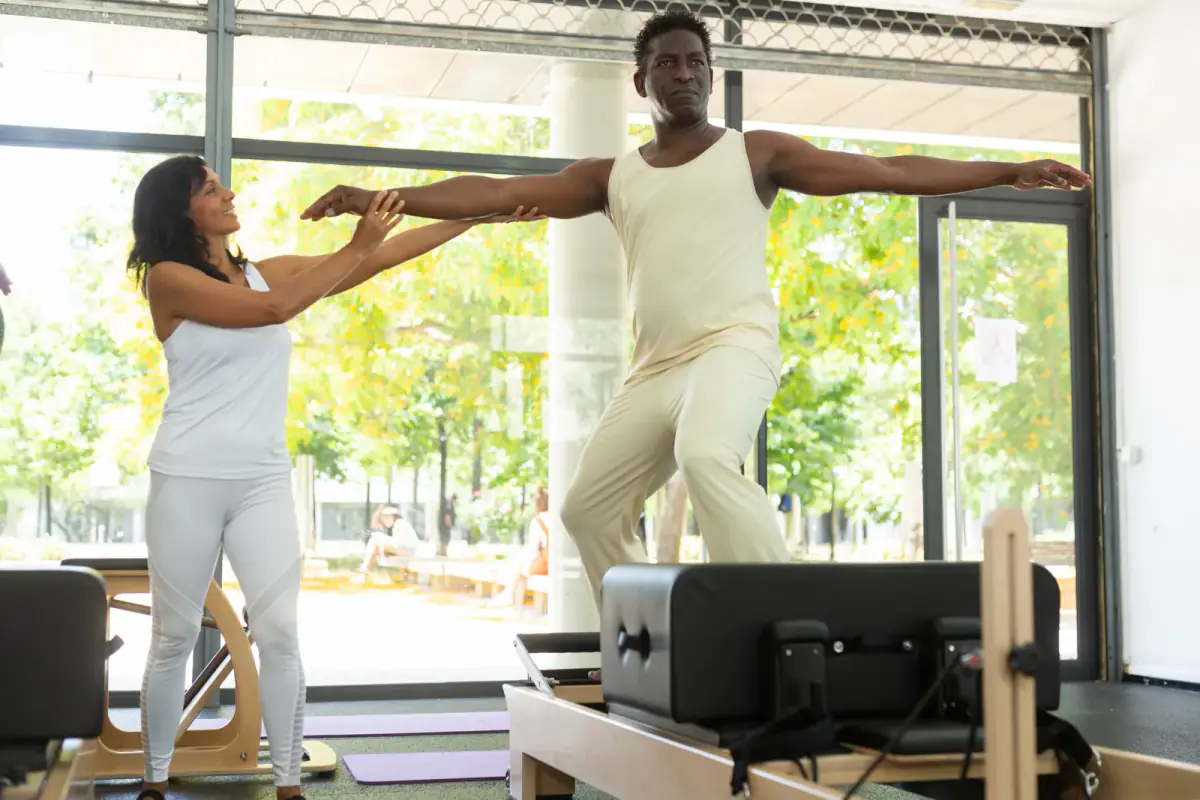
A personal trainer can partner with a yoga or pilates studio by positioning strength and mobility coaching as a complement to what the studio teaches, then proposing a workshop swap and a simple way to share clients. The partnership works because the two businesses solve different halves of the same body: studios build control and flexibility, while a trainer adds load and progression. If you are curious about the instructor side of renting private space, see the pilates instructor space page.
Why the fit is better than it looks
Studio members tend to be regular, committed and willing to pay for coaching. Many of them also ask their instructors questions the instructor does not coach, such as “how do I get stronger?” or “what should I do for my hips?” A trainer who answers those questions well gives the studio a reason to refer out without losing a member.
Trainers face the opposite gap. Strong clients often have stiff hips and shoulders, and a good studio can improve how they move. A referral from you to the studio is as valuable to your clients as the one in the other direction is to theirs.
Frame it as a complement
The owner’s first worry is competition, so address it directly. A pitch that works:
“I coach strength one on one in Carmel. Your members often ask about weights, and my clients often need what you teach. I would like to send you my clients and offer yours a workshop on strength basics.”
Notice what the pitch does not do. It does not suggest you teach classes in their style, and it does not ask to use their members’ list. Say clearly that you do not teach what they teach.
Start with a workshop swap
A single event is easier to approve than a standing arrangement. Three formats:
- A strength-and-mobility workshop for members. Ninety minutes on basic loaded movements, held in a neutral room so the studio’s floor is untouched.
- A guest session at the studio. A short class on how to load a hinge or a squat, led by you, with the instructor present.
- A reverse swap. The studio’s instructor leads a flexibility workshop for your clients.
If you run the workshop in a rented room, up to four attendees fit in a larger private room at FlexWerk in Carmel, and your first hour as a fitness professional is free through the sign-up page. A small group keeps it hands-on and makes the event easy for the studio to promote.
What to agree on in writing
Keep a one-page note. It should cover:
- Who owns each client. A client who trains with both is the client’s own choice, and neither side should discourage that.
- Where sessions take place. Do not train in the studio’s room without written permission.
- Insurance. Each side carries its own coverage, and each should confirm what is covered off site.
- Money. Whether anyone pays anyone. If there is a referral fee, tell clients and check any rules that apply.
- How either side can end it. A simple notice period is enough.
Run the relationship
Meet quarterly. Share a short list of what you each saw: which workshop topics drew interest, how many clients crossed over, and which questions members keep asking. Mention the studio in your newsletter and ask them to do the same. Over time the pattern is similar to other practitioner relationships, as described in wellness referral partnerships.
Questions to ask the owner in the first meeting
Come with questions as well as a pitch. Studio owners respond well to a trainer who is curious about their business.
- What do your members ask for that you do not offer?
- Which times of day are quiet, and which are full?
- Have you worked with a trainer or another practitioner before, and what went well?
- Is there anything you would not want us to do or say?
- How do you like to communicate: in person, by message or by email?
Write down the answers and use them to shape your proposal. A pitch that echoes the owner’s own words is far more likely to be accepted than a generic one.
What success looks like after three months
Set a modest target together before you start. A fair goal for a first quarter is a small number of clients crossing in each direction, one well-attended workshop and a clear sense of whether to continue. Review the numbers honestly. If clients are not crossing over, the issue is usually the offer or the audience, not the idea of partnering. Adjust the topic, the timing or the promotion, and test once more before you decide.
Know your limits
Do not teach the studio’s method unless you are qualified in it, and do not advertise it as your own. Stay inside your scope: you coach exercise, you do not treat injuries. If a member has pain, point them to their clinician. Scope discipline is also what makes studio owners comfortable sending people to you.
A simple first-month plan
In the first week, take two classes at the studio so you understand what members experience, and pay for them like any other customer. In the second week, send the owner a short note with your pitch and a suggested workshop date. In the third week, meet to agree on the date, the topic and who promotes it. In the fourth week, run the event, collect sign-ups and send a thank-you the next day. Then review together: who came, who booked, and whether a second event makes sense.
Treat the first event as a trial for both sides, and be willing to walk away graciously if it does not suit the studio. A good partnership also helps you attract the right clients over time, which fits the longer approach in building a referral engine. If the studio’s neighbors, such as apartment communities, could also be a source of members and clients, apartment community partnerships covers that approach.
Handled well, the relationship pays off in both directions for years, because the studio’s members and your clients keep moving between the two businesses as their goals change.
Related questions
Will a studio see me as competition?
Not if you say plainly that you do not teach what they teach. Describe your work as loaded strength and one-on-one coaching, and offer to send people back to their classes.
Do I have to pay the studio for sharing clients?
Not necessarily. Many partnerships start as a swap with no money changing hands. If a fee is discussed, put it in writing and tell clients.
Can I teach a workshop in the studio's own room?
Only with the owner's written permission, and check the studio's lease and insurance requirements. Many partnerships run the workshop in a neutral private room instead.