
How Much to Charge for Private Yoga Lessons
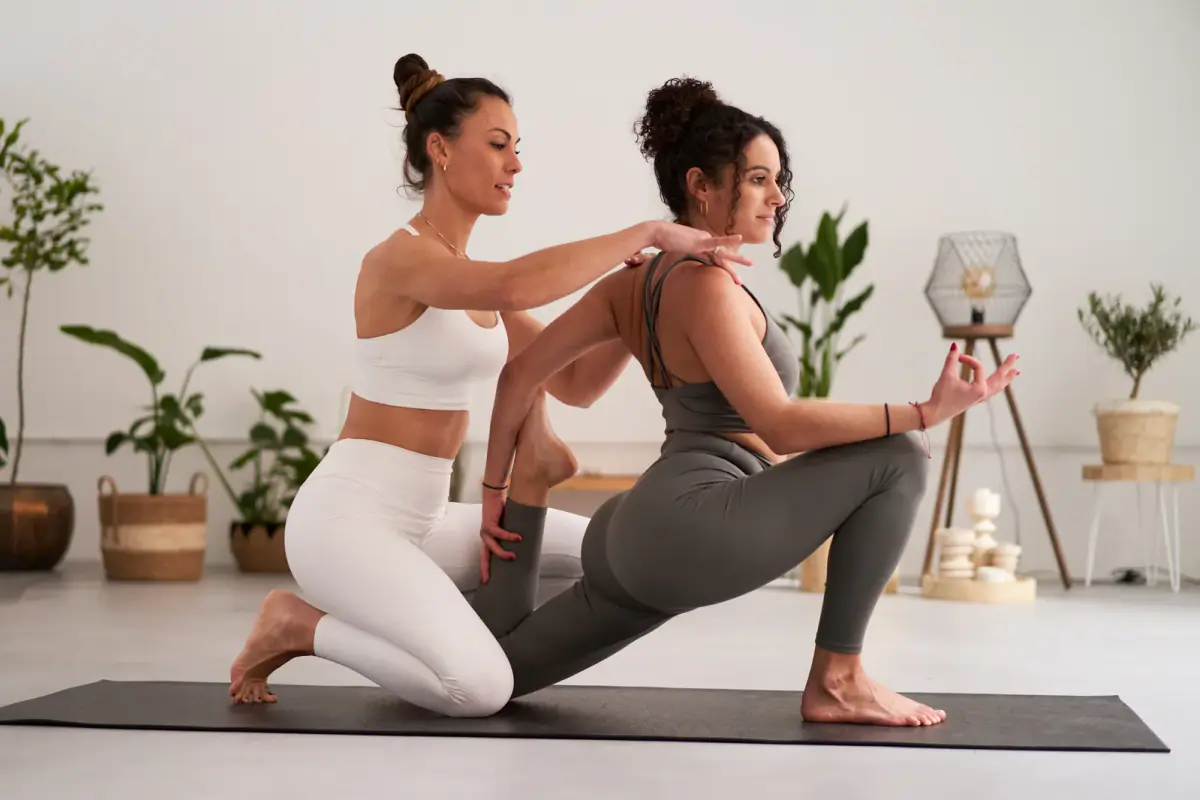
Most yoga teachers in the Carmel area charge a private lesson near the private personal training range of $75 to $125 per session, set by session length, whether you travel or host, and whether the buyer is a student or a company. That range comes from the broader north metro pattern for one on one instruction in private settings, not from a yoga specific survey, so treat it as an anchor and adjust to your own experience and calendar. This guide builds the number in layers, starting with the room you teach in: the yoga instructor private space page shows what a rented room adds.
Start with the hour you actually work
A private lesson is never just the teaching minutes. Price the whole block:
- Prep and reset. Laying out props and clearing the space before the student arrives.
- The lesson. Typically 60 minutes, sometimes 75 or 90 for a longer practice.
- Notes and follow up. A few minutes to record what you taught and send the take home sequence.
- Travel, if any. Door to door, both ways, plus parking.
If a 60 minute lesson costs you 90 minutes of working time, your effective hourly rate is two thirds of the sticker price. Run that arithmetic before you accept a rate that looks fine on paper. The same logic is why how to price personal training in the Carmel market treats the setting as a pricing lever, not an afterthought.
Session length: three formats worth offering
| Format | Typical use | Pricing approach |
|---|---|---|
| 45 to 50 minutes | Focused practice, a returning student, a specific goal | Slightly under the 60 minute rate |
| 60 minutes | The standard lesson | Your anchor rate |
| 75 to 90 minutes | A first lesson with intake, or a longer restorative practice | Anchor rate plus a proportional increase |
Offer a small menu and let students choose. A single length forces everyone into the same box, and the shorter option often turns a hesitant inquiry into a booking.
Travel versus a rented room
House calls feel premium and convenient, but they carry hidden cost. Drive time is unpaid, a student’s living room may not have the space or quiet you want, and your own setup travels with you. A rented private room reverses the equation: the room cost is a known hourly number, the space is consistent, and you can stack students back to back without a drive between them.
At FlexWerk in Carmel, private rooms rent by the hour from $18 to $22, cardio rooms from $12, with no lease or membership and the first hour free for fitness professionals. Rooms are equipped for strength and cardio rather than yoga, so you bring your own mat and props, a point covered in what to carry for private yoga lessons. Against a lesson fee in the $75 to $125 band, one booked hour is a small share of revenue, and two lessons stacked into back to back hours share a single trip.
A simple comparison, using round numbers that are illustrations rather than promises: a teacher who travels three times a week spends perhaps four or five extra hours on the road; the same three lessons in one rented room cost three hours of room time and no drive. Use the calculator to put your actual figures in.
Student pricing versus corporate pricing
A student pays from their own pocket and buys a relationship. A company buys a benefit for employees and expects invoices, scheduling reliability and often a group or recurring format. Price them as different products:
- Student tier. Your standard rate, with a package discount for a block of lessons and a clear cancellation policy.
- Duet or semi private tier. A modestly higher fee for two students, which is lower per person and higher per hour than a solo lesson.
- Corporate tier. A higher rate for the extra administration, a defined minimum number of sessions and payment terms.
Do not discount corporate work to win it; discount the number of sessions you promise instead. If an employer asks for a rate break, offer a slightly larger block at your standard rate rather than lowering the price itself.
A worked rate card
Here is a sample structure with illustrative placeholders, to show the shape rather than set your price. A solo 60 minute lesson sits at the anchor rate you chose inside the $75 to $125 band. A duet is priced higher per hour but lower per person, so two friends feel they are saving while you earn more for the hour. A block of four or six lessons carries a small discount in exchange for payment up front. A corporate session carries the highest hourly rate because it includes invoicing, scheduling and usually a fixed minimum.
Write the card on one page and keep it consistent. When an inquiry asks for a discount, point to the block tier rather than editing the base price. That habit protects the rate you will want to raise later, and it keeps every student on the same footing.
How to raise your rate
Give existing students notice of 30 to 60 days, raise in modest steps, and pair the increase with something visible, such as an updated home practice plan or a better room. New inquiries see only the new rate, so you can adjust upward without a conversation. Track your fill rate: when your calendar stays full for several weeks, the market is telling you the rate is too low.
Checklist before you publish a rate card
- Anchor 60 minutes inside the $75 to $125 band that fits your experience.
- State your cancellation window and what happens inside it; no show and late cancel policies shows wording that holds up.
- Decide where you teach, and price travel separately if you go to clients.
- Confirm your insurance covers the format; yoga teacher insurance cost explains what to ask for.
- Test the number against real demand: whether yoga teachers can make a living teaching privately turns the rate into a weekly income picture.
A rate you can say out loud without apologizing is worth more than a clever package. Book one hour in a private room, teach one lesson at the rate you chose, and see how the number feels once you are standing in it.
Related questions
Should a private yoga lesson cost more than a studio class?
Per person, yes, by a wide margin. A class ticket is shared attention across a room, while a private lesson is customized attention for one student, and the price should reflect the difference.
Is it fair to charge less for a student than for a corporate client?
It is common and defensible when the discount is stated as a tier with a reason, such as an off peak slot. Quietly undercutting your own rate card is what erodes trust.
How much should I add when I travel to the client?
Charge for the time, not only the lesson: drive time, parking and setup are unpaid hours. Many teachers add a travel fee or set a higher at home rate and a lower room rate.