
How to Record an Online Workout Course in One Day
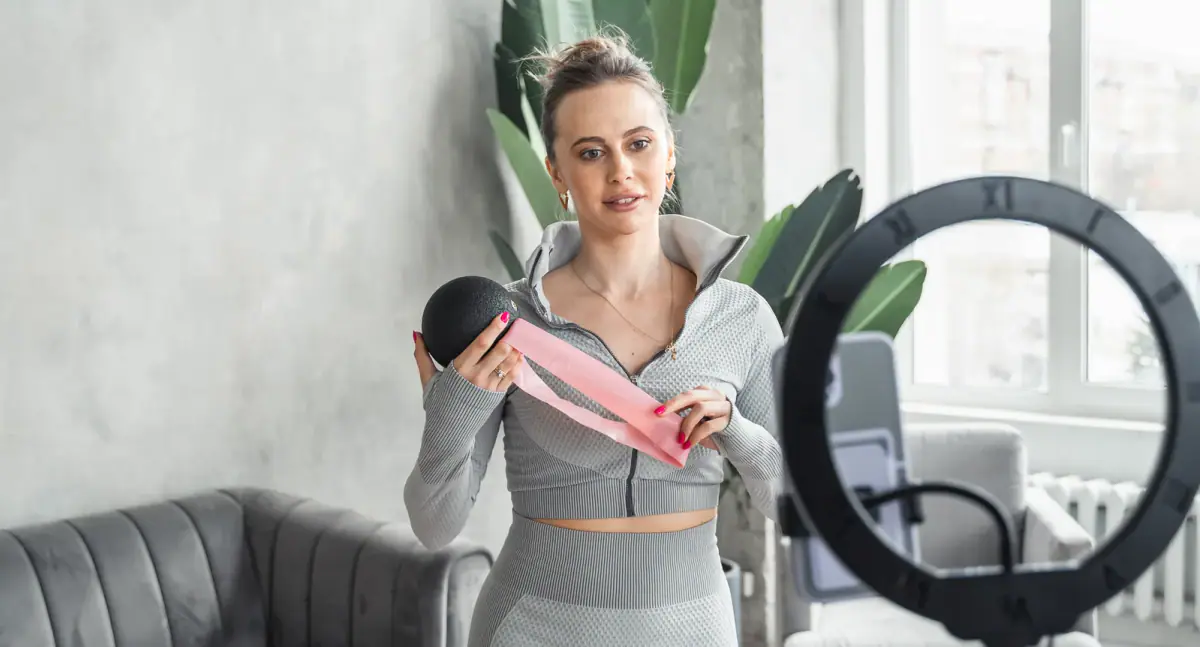
A paid course lives or dies on consistency: the same room, the same light, the same voice, the same pace. The most efficient way to record an online workout course in one day is to batch by exercise and setup rather than by lesson order, working from a written shot list with a fixed number of takes per item. Done well, a single booked day in a private hourly space yields a full library. Here is the plan, from preparation to pickups.
Before the day: write the shot list
The shot list is the shoot. List every clip your course needs, then sort them into three groups:
- Exercise demos: each movement shown once, from the angles a student needs.
- Follow-along sessions: full workouts the student does in real time with you.
- Talking segments: introductions, safety notes, progression advice and wrap-ups.
For each item, write the name, the intended length, the camera angle, the equipment and the outfit. Add one column for coaching cues, in plain bullets, because you will forget them under the lights. A twelve-week course might hold dozens of clips, but many of them repeat the same exercises in different combinations, and that repetition is your advantage.
Then count what you actually need to film. If a follow-along session reuses nine demos you already have, you may only need to record the transitions and the live cueing. Cutting the list now saves hours later.
Batch by setup, not by lesson
Moving a camera, changing a bench position or swapping equipment costs minutes each time. Group your clips so each setup is used once:
- All clips from the front angle in one block.
- All side-angle clips in the next block.
- All floor work together.
- All clips needing the same equipment together.
Within each block, film the clips in order of difficulty, hardest first while you are fresh and your energy is highest. Talking segments go at the end of the morning or the start of a block, when your voice is warm.
When you shoot in a single room, your lighting stays constant, which matters more than any camera upgrade. For a lighting setup that holds up across a day, see how to light a fitness video in a gym room. A day of filming in the same private room also keeps the audio consistent, which students notice more than they realize; the sibling topic of choosing mics for filmed workouts covers that.
Take structure that saves editing time
A repeatable pattern for each clip helps your editor, who may be you:
- Start recording and wait three seconds in silence.
- Say the clip name aloud, so you can find it in the footage.
- Perform the clip from the top, with full cues.
- Hold the final position for three seconds without moving.
- Say “pickup” and a short note if you spotted a problem.
Do two takes per exercise by default and a third only if the second has a clear problem. Having extra takes on every item gives you a safety net, but a fourth take rarely beats a rested third attempt later.
Keep a simple log, either on paper or in a notes app: clip name, take number, a star for the best one. That ten-second habit can save an hour of scrubbing through footage.
A sample day
A schedule keeps you honest. Here is one structure for a day of roughly six booked hours; adjust it to your course:
| Block | Focus |
|---|---|
| Hour 1 | Setup, light and sound test, one short test clip, review on a screen |
| Hours 2 to 3 | Demos from the main angle, then the side angle |
| Hour 4 | Follow-along sessions, filmed in full, with a break before each |
| Hour 5 | Talking segments and wrap-ups |
| Hour 6 | Pickups, retakes and the intro you were not happy with |
Weekday spaces open at 5 AM and close at 9 PM, with weekend hours from 7 AM to 4 PM, so a quiet early block is often the best time for talking segments. Check the app for availability and book the whole day before you invite anyone to help.
Prepare your body and your plan
Recording a full day of exercise is demanding. Eat before you start, bring water, and plan your demos so the hardest or most tiring movements are spread across the day rather than stacked. If your follow-along sessions are intense, record them with breaks between so your form and cues stay accurate. If you are instructing others on camera, make sure your own technique is something you would be happy to see repeated by thousands of people.
Prepare outfits, too. Bring more than you think, and keep colors consistent within a lesson if you plan to cut between clips. Matte, mid-tone clothes photograph more reliably than bright white.
Costs and the business case
A one-day shoot is an investment, so frame it that way. Add the room hours, your preparation time and any help you hire, then divide by the number of students you need to break even. Spaces rent by the hour with no lease or membership, and the first hour is free for fitness professionals, so a test day costs little to try. Because the room is filming-friendly, with controllable lighting, music streaming and WiFi for moving footage, you spend less on setup than you would in a rented studio.
For further reading on structuring a program shoot, the one-day program shoot plan works through production hour by hour. After the shoot, name and file the footage with the system in building an exercise demo library, so the clips keep paying for years.
After the day: sort before you edit
Before any editing, spend an hour sorting. Copy the footage to two places, rename the best take of every clip with the name from your shot list, and move the rest into a folder you can ignore. Watch each chosen take once with sound on, because audio problems hide in the middle of a clip. Note any clip that needs a pickup while the room is still fresh in your memory, and book a short return session if more than a few need redoing.
Your next step
Pick the shortest module of your course and record it as a pilot: write the shot list, batch the setups, film two takes each and review the result. One pilot hour will tell you whether your plan, your room and your pace can carry the full day.
Related questions
How many videos can I realistically record in one day?
It depends on length and complexity, but a focused day of roughly six hours can capture a library of short demos plus several full follow-along sessions if the plan is tight. Count your takes, not just your finished minutes.
Should I script a workout course?
Script the structure and the cues, not every word. A bullet list of the key points for each exercise keeps you accurate and natural, while a full script makes most coaches sound stiff.
What if I make a mistake in the middle of a take?
Pause, reset and restart that exercise from the top. Editing around a mid-take mistake costs more time than a second take, and a clean beginning gives you a clean cut point.